Inkjet Marking Technology Ultimate Guide: Applications, Printers & Equipment
Introduction
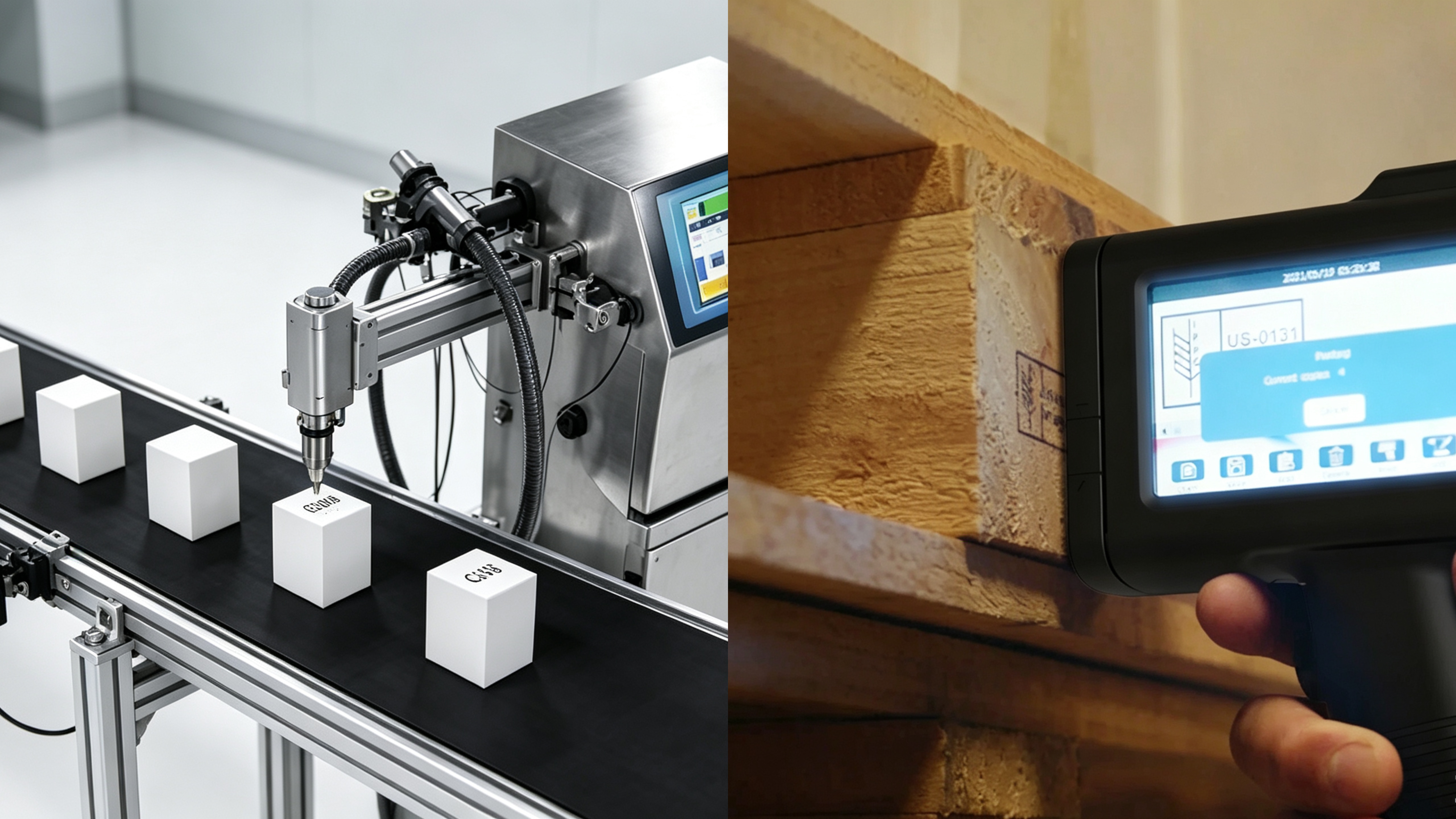
Inkjet marking is a non-contact printing technology that propels tiny droplets of ink onto surfaces to create text, barcodes, logos, and variable data. Unlike traditional contact-based printing methods, inkjet marking works on virtually any material—cardboard, plastic, glass, metal, wood, and fabric—without physically touching the surface. This makes it ideal for production lines where speed, flexibility, and cleanliness matter.
The global inkjet marking equipment market is valued at USD 2.8 billion as of 2022 and is expected to reach USD 4.87 billion by 2031, driven by rising demand for product traceability, regulatory compliance, and e-commerce packaging personalization. Thermal Inkjet (TIJ) and Continuous Inkjet (CIJ) are the two dominant technologies, each serving different production needs.
How Inkjet Marking Works
Think of inkjet marking like a tiny, super-fast squirt gun—except instead of water, it fires microscopic droplets of ink onto products to print codes, dates, or barcodes.
Inside the printer is a printhead, which holds dozens of tiny nozzles (think of them as pinholes). Each nozzle is about as thin as a human hair. When you trigger a print, the printer creates a quick pressure burst—using either a heat bubble (in TIJ printers) or a vibrating crystal (in CIJ printers)—that pushes a tiny droplet of ink out of the nozzle and onto the surface below.
The ink has to be the right consistency. If it's too watery, the droplets spread out and blur. If it's too thick, they clog the nozzles like a blocked straw.
Once the droplet lands, what happens next depends on what you're printing on. If it's cardboard or wood, the ink soaks in. If it's plastic or glass, the ink sits on top and dries quickly to stay in place.
This whole process happens thousands of times per second, printing clean, readable marks without ever touching the product. That's why inkjet works on fragile, curved, or fast-moving items—it's contact-free, fast, and reliable.
Types of Inkjet Marking Technologies
-and-Thermal-Inkjet%20(TIJ)%20printhead-technology-mechanisms.png)
Industrial Application Examples and Case Studies
Food & Beverage: TIJ printers apply expiration dates and batch codes on cardboard boxes and pouches. CIJ systems handle high-speed beverage canning lines. FSMA 204 traceability requirements are driving adoption of QR codes on packaging.
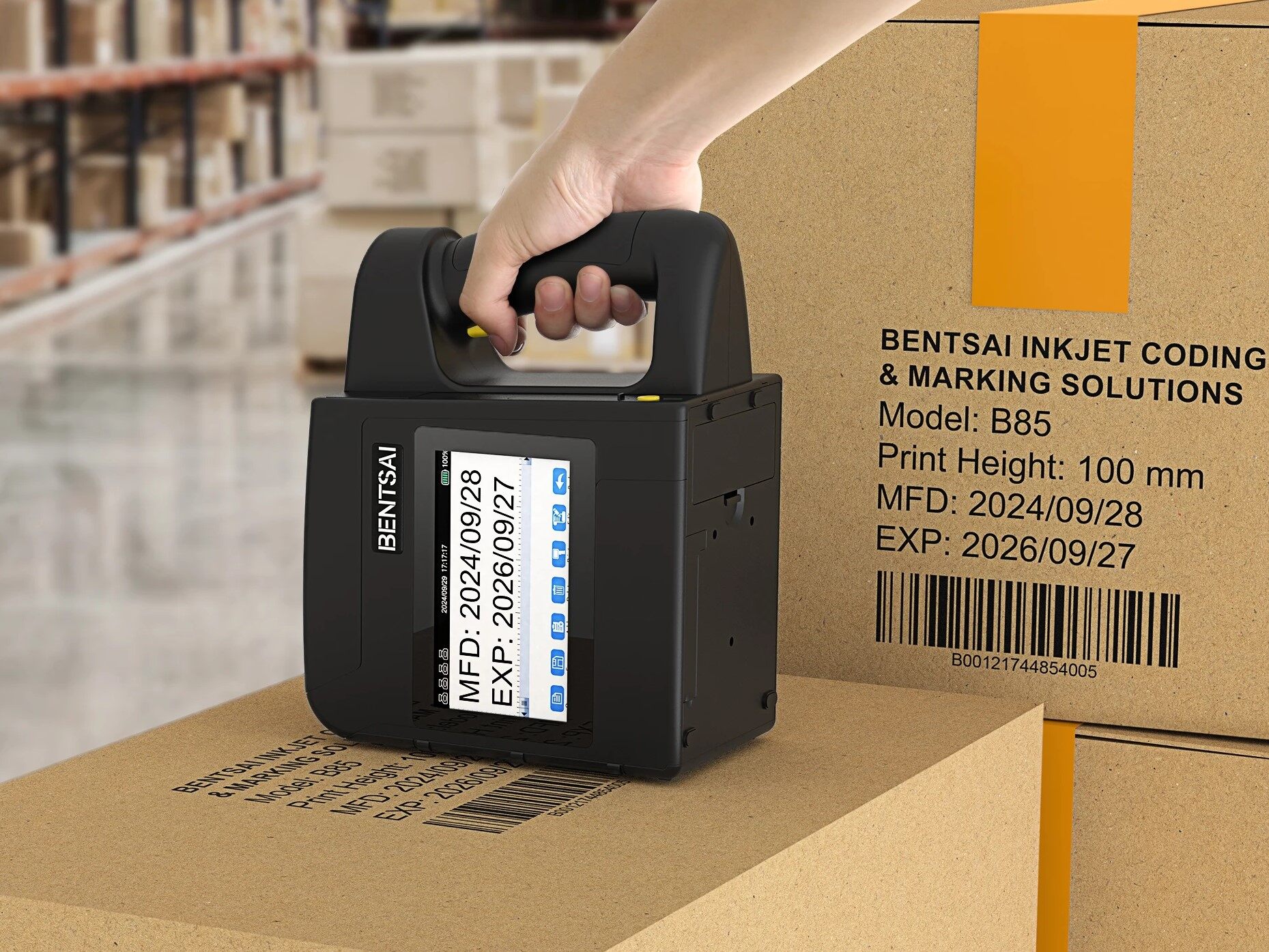
Logistics & Warehousing: Handheld TIJ printers generate barcodes and QR codes directly on shipping boxes at the point of packing—eliminating travel to centralized label stations. The Bentsai B71 series even features built-in scan-to-print functionality for quick barcode reproduction.
Pharmaceuticals: TIJ's 600 DPI resolution ensures small DataMatrix codes remain scannable, meeting FDA 21 CFR Part 211 and UDI requirements. Piezoelectric DOD systems handle high-security anti-counterfeiting applications.
Manufacturing & Construction: TIJ printers mark wood, composite, and metal surfaces. The Bentsai B85 wide-format printer (100mm print height) is widely used for marking lumber, pipes, and large industrial components.
(Source: Hitachi Industrial Case Studies)
Choosing the Right Inkjet Equipment
Selecting the right equipment depends on your production environment and substrate. Here's a practical decision guide:
Choose CIJ if:
- You run 24/7 high-speed lines (beverage canning, bottling)
- You print on non-porous, curved, or vibrating surfaces
- You have maintenance staff and a budget for consumables
- Your priority is speed over print resolution
Choose TIJ (handheld) if:
- You print on porous surfaces (cardboard, wood, paper)
- You need portable, flexible coding across multiple lines
- You want to eliminate adhesive labels and pre-printed packaging
- Your operators need simple, low-maintenance equipment
For a deeper dive, explore the versatile applications of handheld inkjet printers. For specific product recommendations, see our thermal inkjet printers lineup.
Maintenance and Total Cost of Ownership
The biggest hidden cost in inkjet marking isn't the equipment—it's maintenance and consumables.
CIJ maintenance pain points:
- Ink costs: CIJ requires ink and solvent (diluent) as dual consumables. Solvent evaporates continuously, so you're constantly buying more.
- Printhead cleaning: Nozzles clog frequently; cleaning requires solvents and sometimes professional service.
- Complex components: Pumps, filters, and charging electrodes need regular replacement.
- VOC management: Solvent-based inks emit volatile organic compounds, requiring ventilation and compliance.
TIJ maintenance advantages:
- No solvents: Printhead is in the cartridge; replace it when ink runs out.
- Minimal cleaning: No pumps, filters, or complex ink systems to maintain.
- Predictable costs: Only consumable is the ink cartridge.
- Operator-friendly: Maintenance takes minutes, not hours.
For help selecting the proper ink for your handheld device, refer to our ink selection guide. For non-porous materials, use fast-dry solvent ink cartridges.
About the Author

Matty Chen is an Inkjet Application Engineer, and BENTSAI Inkjet Printing technology Consultant. He specializes in industrial inkjet printing technologies, with a focus on handheld printers, thermal inkjet systems, and coding solutions. His work explores ink performance, material compatibility, and practical printing applications for businesses across manufacturing, packaging, and product customization industries.
Handheld Inkjet Printers vs. Traditional Labeling Methods: Pros and Cons Analysis
Ask Question
No questions and answers

