Choose the Right Ink for Your Handheld Inkjet Printer
Choosing the right ink for your handheld inkjet printer is more than a simple purchasing decision—it directly affects compatibility, print quality, and the overall performance of your device. Each printer model uses specific cartridges with built-in chips that identify and regulate ink usage, which means mismatched ink can fail to be recognized or trigger errors. Just as important, different printing projects require different ink formulations to ensure sharp, durable results on various materials.
Using the wrong ink can quickly lead to problems: incompatibility with the printer, interruption of print jobs, faded or poor-quality output, smudging on certain surfaces, clogged nozzles, and even long-term damage to the equipment. Understanding how to select the proper ink is the key to consistent, professional, and reliable printing.
Key Considerations
1. Printer Compatibility
Many handheld printers use chip-recognized cartridges, choosing the wrong ink will lead to detection errors, printing failure and slow down your workflow. Always use the cartridge designed for your printer to ensure smooth operation.
2. Material Types
Different inks perform differently on paper, plastic, metal, glass, ceramics, wood, or coated packaging.Non-porous materials require solvent-based inks for quick drying and strong water resistance, while porous materials are compatible with both water-based and solvent-based options. If your applications are limited to porous surfaces, water-based cartridges are usually more cost-effective. Always check whether the ink is designed for porous or non-porous substrates before purchasing.
3. Environmental Factors
Temperature, humidity, dust, and exposure conditions can significantly impact ink performance. When choosing a cartridge, consider not only the environment where the printer will be used, but also the conditions in which the printed products will be stored or transported.
If your items need to withstand low-temperature refrigeration or moderate outdoor friction, the fast-drying ink cartridges used in handheld inkjet printers are generally sufficient. However, if the printing must endure extreme environments—such as high heat, prolonged UV exposure, heavy moisture, or sand and dust—then the focus should not only be on selecting a special ink. In these cases, upgrading to industrial-grade coding equipment may be necessary to ensure durability and long-term readability.
4. Drying Time
For fast-paced workflows like conveyor production or warehouse labeling, quick-dry ink prevents smudging and keeps operations running smoothly.
5. Ink Adhesion
Ink adhesion is usually related to how well and how long will the ink stay on the printed objects. Poor quality ink replacement can be wiped off easily and ink colors will fade more quickly under harsh long-term UV exposures, which in return will bring unhappy experience to your customers and damage your brand image. Hence, before choosing an ink cartridge, you can ask the seller for ink adhesion test results. Referring to the genuine ink cartridges can always guarantee you the quality you need.
Ink Types & Usage Situations
Ink cartridges come in various types, each made for specific surfaces and tasks. Using the correct ink type helps achieve sharp, long-lasting, and quick-drying prints for your work.
1. Water-based Inks
- Best Surfaces / Materials: Porous materials like paper, cardboard, wood
- Pros: great ink adhesion, vibrant color, affordable
- Cons: not suitable for non-porous and coated surfaces
2. Solvent-based Inks
- Best Surfaces / Materials: Non-porous surfaces like plastic, metal, glass, films
- Pros: quick-drying, high adhesion, smudge-resistant
- Cons: slightly stronger odor; requires proper ventilation
3. Specialized Inks (Food-Grade, High-Temperature, Anti-Counterfeit)
Designed for compliance or niche applications such as food packaging, electronics, pharmaceuticals, and high-heat environments.
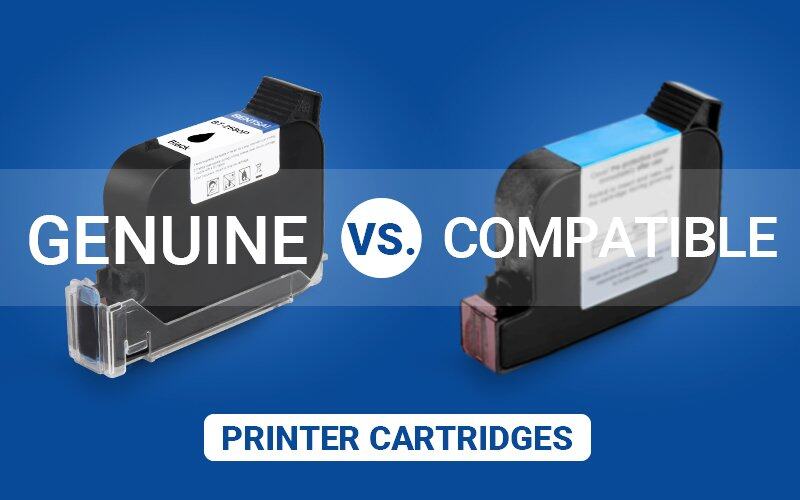
Original (OEM) vs. Generic (Third-Party) Ink
There are always original OEM and generic ink cartridges for your handheld inkjet printers. OEM inks are made by the printer manufacturer with high quality, while generic inks are made by third-party companies and known for their cost-effectiveness. Despite this, there are more differences between the two, check the table for details.
| Ink Type | Advantages | Disadvantages / Risks |
| Original (OEM) Ink |
● Guaranteed compatibility with the printer ● Stable and reliable print quality ● Protects printhead and reduces printer wear ● Best for long-term equipment health ● Backed by manufacturer support |
● Higher cost |
| Generic / Third-Party Ink |
● Lower cost ● Wider variety of options ● May offer specialized formulations |
● Risk of chip incompatibility ● Potential for clogging, leakage, or poor adhesion ● Less consistent color and performance ● Voids warranty or damages printer in severe cases |
Why Choose Bentsai Ink Cartridges?
1. Excellent handheld inkjet printer cartridge manufacturer
With over a decade of expertise in thermal inkjet (TIJ) technology, Bentsai - an excellent manufacturer of handheld inkjet printer cartridges, stands out as a pioneer in the development and industrial application of TIJ solutions for the coding and marking industry. As the original manufacturer of TIJ coding printers and printhead cartridges, Bentsai delivers stable, reliable, and high-precision printing performance for packaging and product identification.
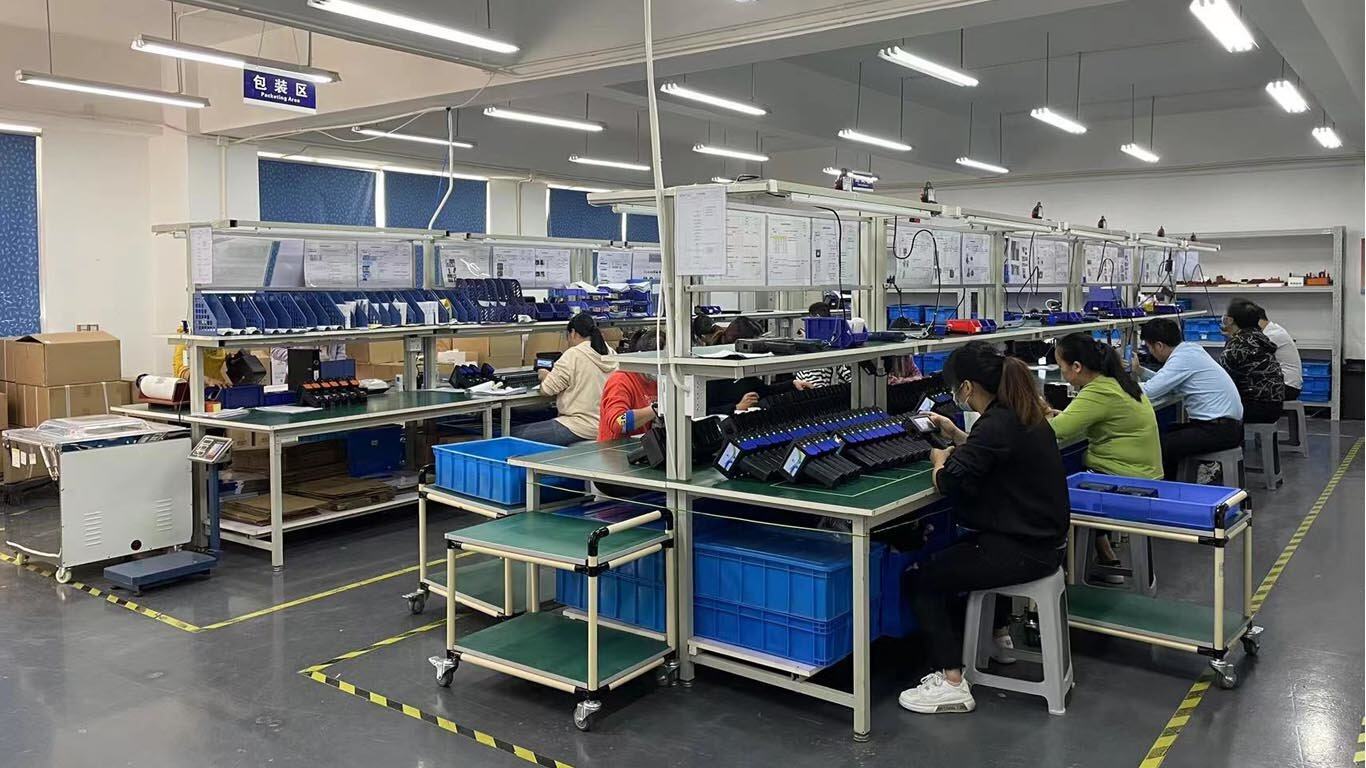
2. Advanced R&D and Technical Capabilities
Bentsai specializes in designing and producing thermal printheads using advanced microfluidic MEMS technology. These printheads serve as the core components of TIJ cartridges and handheld printers, ensuring consistent droplet control, sharp print quality, and long-term stability. Bentsai is also the first company in China to achieve mass production of thermal printhead chips—an accomplishment that positions the brand as both an original printhead cartridge manufacturer and a driver of industry innovation.
3. Perfect Compatibility with Bentsai Printers
Every ink cartridge is engineered for seamless compatibility with Bentsai handheld inkjet printers, ensuring accurate chip recognition, stable performance, and reduced risk of printing interruptions.
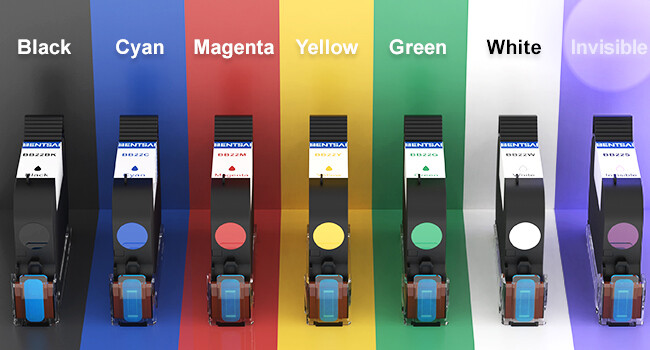
4. Solutions Tailored to Your Needs
Whether you need fast-drying solvent-based inks for non-porous materials or cost-efficient water-based inks for porous surfaces, Bentsai provides a full range of cartridges designed to match different application scenarios and environmental conditions.
In Conclusion
Selecting the right ink is essential for achieving smooth printing, durable results, and optimal equipment performance. By understanding compatibility, material requirements, environment, drying time, and adhesion, businesses can avoid printing failures and unnecessary costs. With reliable OEM cartridges from Bentsai, users can ensure consistent quality and long-term reliability for every printing task.
About the Author

Matty Chen is an Inkjet Application Engineer, and BENTSAI Inkjet Printing technology Consultant. He specializes in industrial inkjet printing technologies, with a focus on handheld printers, thermal inkjet systems, and coding solutions. His work explores ink performance, material compatibility, and practical printing applications for businesses across manufacturing, packaging, and product customization industries.
Ask Question
No questions and answers

