FDA Lot and Batch Number Formatting Checklist
The Operational Importance of Batch Traceability
Why does the FDA require lot and batch numbers on packaging? The answer is simple: recalls. When a product is contaminated, mislabeled, or defective, the FDA needs to trace exactly which batch caused the problem—and fast. Without a unique lot number on every package, a minor issue with one production run can force a recall of every unit on the market.
According to the FDA's recall database, hundreds of products are pulled from shelves each year due to coding issues, undeclared allergens, or contamination. The Safe Food Alliance Industry Trends Report notes that 2025 saw a significant increase in food recalls, including the second-highest quarterly total for FDA recalls since Q1 2020. The volume of impacted units surged 75.8 percent, rising from 14.32 million to 25.17 million between the second and third quarters. A readable, compliant lot number is often the difference between a targeted recall and a catastrophic brand-wide shutdown.
The FDA's position is clear: every packaged product intended for human consumption or medical use must bear a lot or batch number that ties it back to its production records. This requirement spans pharmaceuticals, biologics, dietary supplements, and most food products.
Introduction: The Operational Importance of Batch Traceability
The FDA's lot number requirements vary by product category. Here are the primary regulations:
- Pharmaceuticals & Biologics
- 21 CFR Part 211.188: Requires batch production records to include a unique lot or control number for each drug product.
- 21 CFR Part 201: Mandates that container labels display lot numbers (or other lot identification) in a prominent, legible location.
- Dietary Supplements
- 21 CFR Part 111: Requires batch production records to include the batch, lot, or control number for finished supplements and each lot of packaged product.
- Food Industries
- FSMA Final Rule on Requirements for Additional Traceability Records for Certain Foods (FSMA 204): Effective compliance date July 20, 2028. Requires traceability lot codes (TLCs) for foods on the Food Traceability List (FTL), combining GTIN with batch/lot numbers to enable 24-hour electronic traceback.
The Ultimate FDA Lot and Batch Number Formatting Checklist
To ensure your packaging meets FDA standards, verify each of these five requirements:
- Alphanumeric Uniqueness: Every lot number must be unique to a specific production run. The FDA does not prescribe a fixed format—manufacturers can design their own numbering system—but it must allow you to trace the batch back to:
- Production date and time
- Ingredient or component lot numbers
- Equipment and processing lines used
- Quality control results
For FSMA 204 compliance, lot codes must be alphanumeric with variable length up to 20 characters and combine with GTIN to create a Traceability Lot Code (TLC).
- Character Legibility & Size: The code must be readable by both humans and scanners under normal warehouse lighting. Common failure points include:
- Print that smears or fades during handling
- Low contrast between ink and packaging (white-on-clear is a frequent violation)
- Codes printed over seams, folds, or curved areas
- Dot-matrix fade that makes numbers unreadable
Best practice: Test under real conditions—condensation, freezer storage, case packing abrasion, and 24-hour rub testing.
- Colorfastness & Durability: The lot number must remain legible throughout the product's shelf life and distribution chain. This means the ink must withstand:
- Moisture and condensation (beverages, cold chain)
- Abrasion from case packing and pallet wrap
- Temperature extremes (frozen foods, heat-sterilized products)
- UV exposure for products stored in direct sunlight
Selecting the right ink chemistry for these conditions is only half the battle; your printing equipment must also be capable of delivering consistent, durable marks on your specific packaging materials. For a deeper understanding of how to match water-based and solvent-based thermal inkjet inks to porous and non-porous substrates, please refer to "The Ultimate Guide to Industrial Date Coding: Technology, Regulations, and Precision Equipment".
- Readability and Data consistency: The lot number must appear as human-readable text on the package. If a barcode or 2D code (QR, DataMatrix) is used, the human-readable lot number must match the encoded data exactly. Discrepancies between what a person can read and what a scanner reads constitute a labeling violation.
- Prominent Position: Place the lot number where it can be easily found without tearing or opening the package. The FDA recommends:
- Immediate container label (the bottle, tube, or pouch)
- Carton or outer packaging if the immediate container cannot bear a full label
- Avoid seams, folds, high-gloss areas, and curved surfaces that distort readability
For biological products, if the container is too small for a full label, it must at minimum show the lot number, product name, and manufacturer name.

Hardware for Compliant Code Printing
What equipment is used to print FDA compliant batch codes? Not all printers are equal for FDA compliance. Your hardware must deliver:
- High resolution (300-600 DPI): Ensures barcodes scan and small text remains crisp
- Fast-dry ink compatibility: Prevents smearing on non-porous surfaces like plastic bottles and coated cartons
- Variable data support: Allows sequential lot numbers without pre-printing thousands of labels
- Durable print head: Maintains consistent quality across long production runs
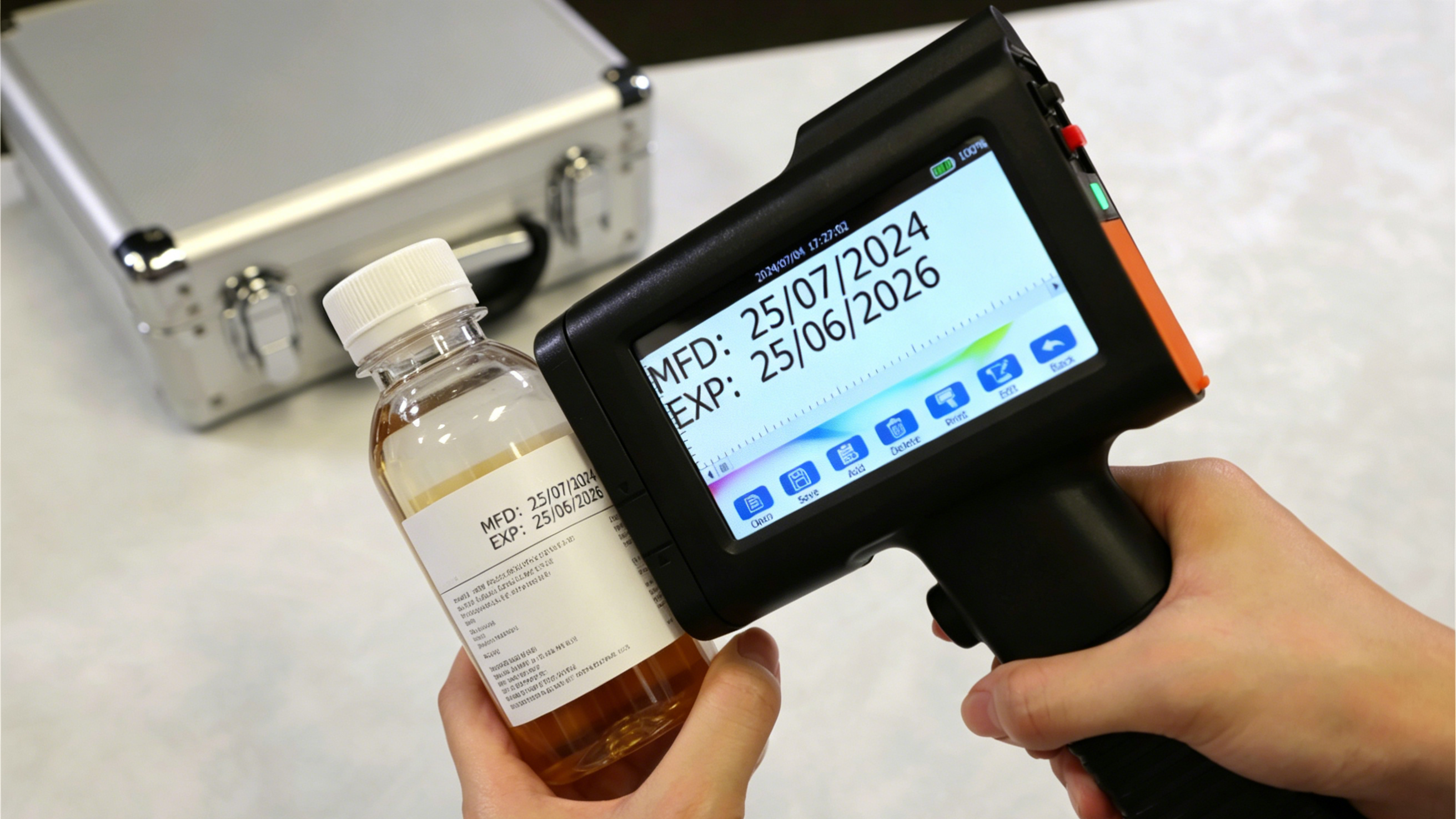
For small to medium batch production or flexible packaging setups, upgrading to a flexible handheld batch code printer that uses dedicated solvent inks allows you to print clear, smudge-proof batch number markings on non-porous surfaces without the significant overhead of automated, fixed online systems.
Conclusion: Protect Your Assembly Line from Compliance Deviations
FDA lot number compliance is not optional—it's the law. Missing or unreadable codes trigger recalls, chargebacks, and regulatory action. Use this checklist to audit your current labeling process:
- Every product batch has a unique alphanumeric lot number
- Codes are legible, durable, and placed prominently
- Printing equipment delivers consistent, high-resolution output
- Human-readable text matches barcode or 2D code data
- Records link each lot number to complete production documentation
With FSMA 204 enforcement now set for July 20, 2028, food manufacturers have additional time to prepare—but the pharmaceutical and supplement requirements are already in effect. Don't wait for an FDA inspection or a recall to reveal gaps in your coding system.
About the Author

Matty Chen is an Inkjet Application Engineer, and BENTSAI Inkjet Printing technology Consultant. He specializes in industrial inkjet printing technologies, with a focus on handheld printers, thermal inkjet systems, and coding solutions. His work explores ink performance, material compatibility, and practical printing applications for businesses across manufacturing, packaging, and product customization industries.
Ask Question
No questions and answers

