FSMA 204 & You: Affordable Traceability Solutions for Small Food Manufacturers
Food safety is changing. In the past, companies would wait for a problem to happen, then recall the product. Now, the focus is on prevention. That means knowing where your ingredients came from and where your products went.
This is what the FDA's Food Traceability Rule (FSMA 204) is all about.
If you handle certain high-risk foods, you now need to keep detailed records and share them with the FDA within 24 hours.
For small food manufacturers, this is a real challenge. How do you meet big regulations on a small budget?
The good news is you don't need expensive software to get there. This guide will show you affordable ways to comply. You'll learn what the rule means, what data you need to track, and how simple tools like batch coding printers can do most of the work.
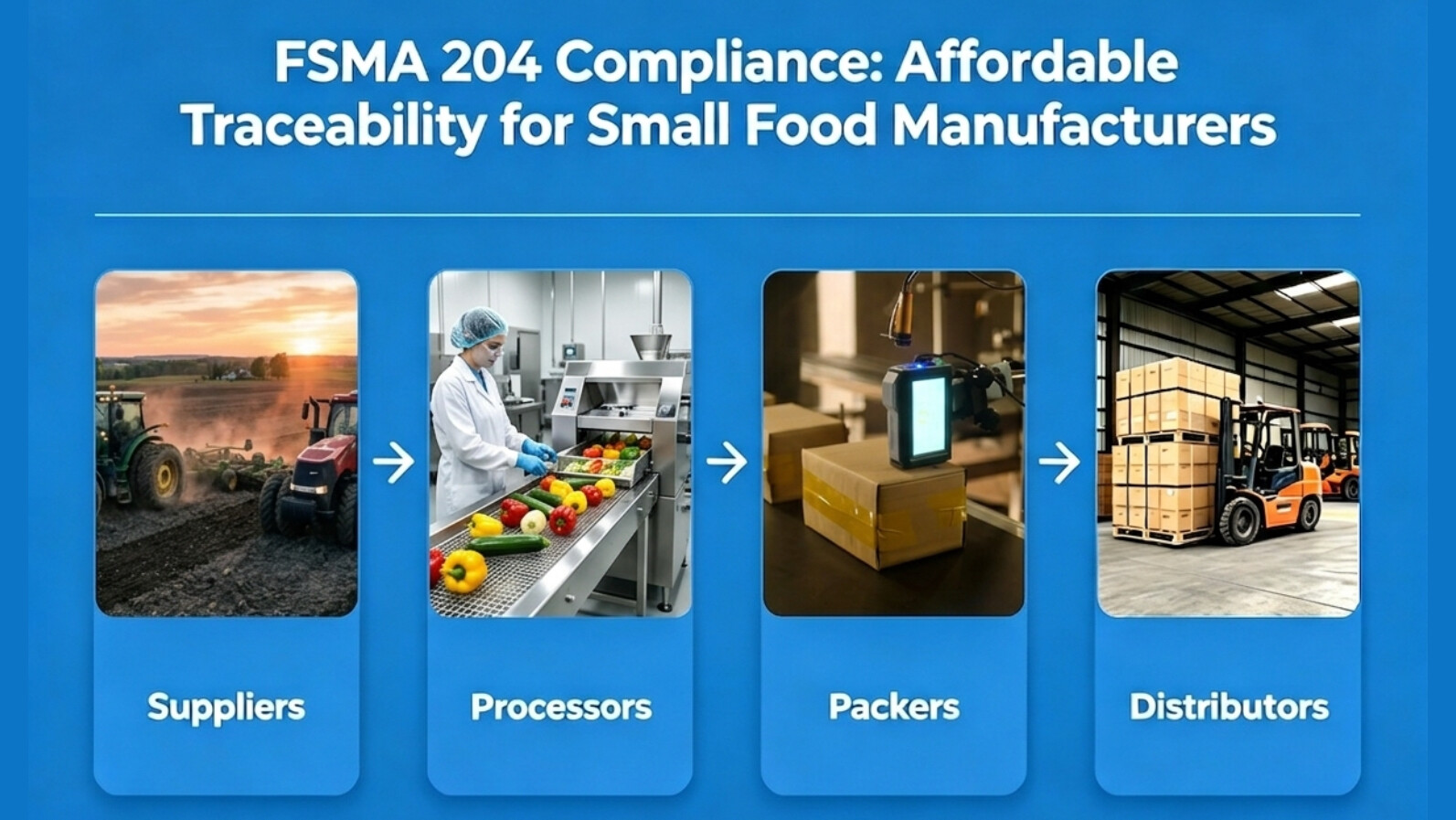
What is the FSMA 204 Rule?
What is FSMA 204?
FSMA 204 is the FDA's Food Traceability Rule. It requires businesses that make, pack, or hold certain high-risk foods to keep electronic records. The goal is to track food quickly during an outbreak.
When does it start?
The original deadline was January 20, 2026. The FDA has now proposed moving it to July 20, 2028. That gives small businesses more time to get ready.
What are the main requirements?
- Food Traceability List (FTL): This is a list of high-risk foods. Examples include leafy greens, soft cheeses, tomatoes, nut butters, fresh-cut fruits, seafood, and deli salads. If you handle these foods, the rule applies to you.
- Critical Tracking Events (CTEs): These are key steps in your supply chain. Harvesting, cooling, packing, shipping, receiving, and transforming. You need to track data at each step.
- Key Data Elements (KDEs): This is the specific data you must record. Things like lot codes, dates, quantities, and supplier information.
- 24-Hour Rule: If the FDA asks for your records, you must provide them within 24 hours. That means your system needs to be fast and reliable.
The Real Cost of Compliance for Small Businesses
For small food makers, two big problems make compliance hard and expensive.
- Software Barrier: Good traceability software can cost a lot. Some basic plans start at $3,000 per year. More advanced systems can cost $30,000, $120,000, or even more per year. For a small business, that's just not possible.
- Spreadsheet Trap (human error and data silos): Some small businesses try to save money by using Excel or paper logs. But this often backfires. Human error creeps in. Data gets missed. Records don't connect. And when the FDA asks for a 24-hour report, spreadsheets can't always deliver.
So what's the answer? You need traceability. But you don't have an enterprise budget. The next section will show you a better way.
Affordable Traceability Solutions for Small Producers
- Start with Traceability Lot Codes (TLC): The heart of FSMA 204 is the Traceability Lot Code (TLC). This is simply a unique code you put on your product. It links that product back to its batch, its ingredients, and its production date. You need to assign a TLC when you first pack or transform a product. This is the basic building block of compliance. And the good news is, you don't need expensive software to print lot codes. A simple batch coding machine can do it.
- Hardware Can Replace Expensive Software: Instead of paying monthly fees for software, think about investing in the right hardware once:
No monthly fees: Pay for the printer once, then print for free
No per-user licenses: One printer works for your whole team
Simple to use: No training or IT support needed. Inkjet printers are great for this. They print variable data directly onto your packaging. Batch numbers, dates, lot codes, QR codes – all of it. Fast and easy.
First-Year Cost: Software vs. Hardware
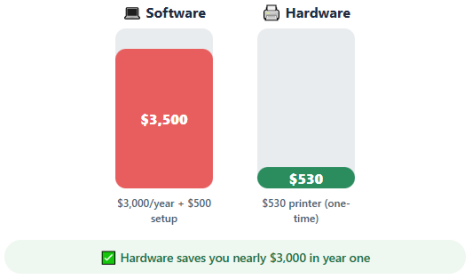
*Software pricing based on entry-level plans (FoodDocs ~$2,999/year).
Hardware cost based on Bentsai 6105F. No monthly fees.
- Adaptable Printing
FSMA 204 requires you to mark variable data on your packaging. But not all packaging is the same.
Some materials are porous: like cardboard and paper. They soak up ink easily.
Other materials are non-porous: like plastic, glass, and sealed pouches. They need fast-drying ink that won't smudge.
The Bentsai 6105F handles both. You can switch between water-based ink (for cardboard) and solvent-based ink (for plastic). The result? Clear, smudge-proof codes on any surface.
Achieving Traceability in 5 Steps
Here is a simple, step-by-step plan to get your business ready for FSMA 204.
- Review the FDA's Food Traceability List (FTL): Look at the FDA's FTL. Do you make, pack, or hold any of these foods? Leafy greens? Soft cheeses? Tomatoes? Nut butters? Fresh-cut fruits? Seafood? Deli salads? If yes, the rule applies to you. If no, you may be exempt. But check carefully – the list is specific.
- Map your supply chain: Draw a simple map of your supply chain. Where do your ingredients come from? Where do you receive them? Where do you pack or transform them? Where do you ship them? Each of these is a Critical Tracking Event (CTE). Mapping them out helps you see what data you need to collect and where.
- Upgrade your labeling workflow: You need to print lot codes, dates, and other variable data directly on your packaging. Can your current hardware do that? If your printer is old or unreliable, you need to choose a good batch coding machine. Look for one that prints high resolution, works on multiple surfaces, and won't smudge.
- Standardize how you record data: Decide how you will record Key Data Elements (KDEs). That means lot codes, dates, quantities, supplier names, and more. You don't need expensive software. A simple digital logbook or well-organized spreadsheet can work. The key is to be consistent. Every time. No gaps.
- Run a mock recall: Test your system. Pick a batch. Pretend the FDA just asked for all records on that batch. Can you find them? Can you send a report within 24 hours? If yes, great. If no, find the gaps and fix them. Better to learn now than during a real recall.
Conclusion
FSMA 204 might feel like just another regulation. But it's also a chance to build trust with your customers.
People want to know where their food comes from. A good traceability system shows them you care. It also protects your brand, cuts costs during recalls, and helps you run a smarter business.
You don't need expensive enterprise software to get there. With a clear plan and the right batch coding hardware, small manufacturers can comply affordably.
Audit your current batch coding equipment and explore cost-effective upgrade options now.
References:
About the Author

Matty Chen is an Inkjet Application Engineer, and BENTSAI Inkjet Printing technology Consultant. He specializes in industrial inkjet printing technologies, with a focus on handheld printers, thermal inkjet systems, and coding solutions. His work explores ink performance, material compatibility, and practical printing applications for businesses across manufacturing, packaging, and product customization industries.
Ask Question
No questions and answers

