What is a Lot Code: A Guide to Formats, Compliance and Printing
Ever noticed a string of letters and numbers on a product label—like "LOT-2405-A"—and wondered what it means? That's a lot code. It's a unique ID assigned to a specific batch of products, linking them back to when and where they were made. Without it, a single defective batch could force you to recall everything you've ever shipped. Lot codes make sure that doesn't happen.
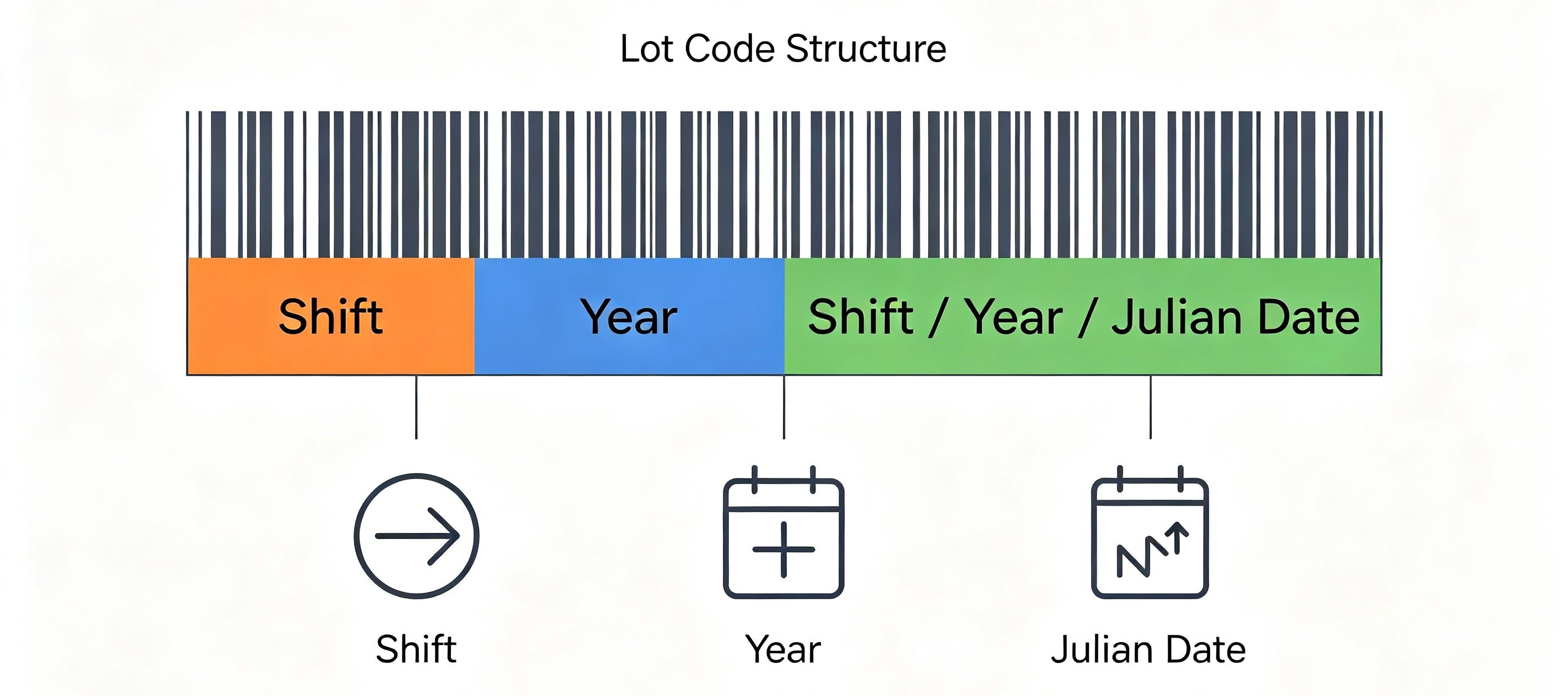
What is a Lot Code?
A lot code is a unique identifier assigned to a specific batch of products produced under similar manufacturing conditions. It helps track and manage entries by linking products to their production details, such as the date of manufacture and the materials used. Lot codes are essential for traceability, quality control, and regulatory compliance, enabling businesses to efficiently monitor and recall products if necessary.
How to Read a Lot Code: Common Formats and Examples
Lot codes come in different shapes and sizes, depending on the industry and the company. But most follow one of these common patterns:
Julian Date Format
This format uses numbers to represent the production day and year. For example, "LOT-2405-A" breaks down as:
- 24 = the year (2024)
- 05 = the day of production (often the 5th day of the cycle)
- A = the shift or production line
Some companies use a 3-digit Julian date—like "165" for June 14th—to show the exact day of the year.
Example: PL-07-165-26-A
- PL = Facility code (Plant A)
- 07 = Product code
- 165 = Julian date (June 14th)
- 26 = Year (2026)
- A = Shift A
Alphanumeric Plant & Batch Identifiers
Other lot codes mix letters and numbers to identify the plant, product, and batch sequence. "PL-07-165-26-A" is one example. Another could be "BATCH-XYZ-001", where "XYZ" tells you the product family and "001" is the batch number.
Lot Code vs. Batch Code vs. Expiration Date
Lot codes, batch codes, and expiration dates serve different purposes in product tracking:
| Identifier | What It Means | Why It Matters | Example |
| Lot Code | A specific production run | Traceability and recalls | "LOT-2405-A" |
| Batch Code | Often the same as a lot code; sometimes a sub-set | More granular tracking | "BATCH-P-01" |
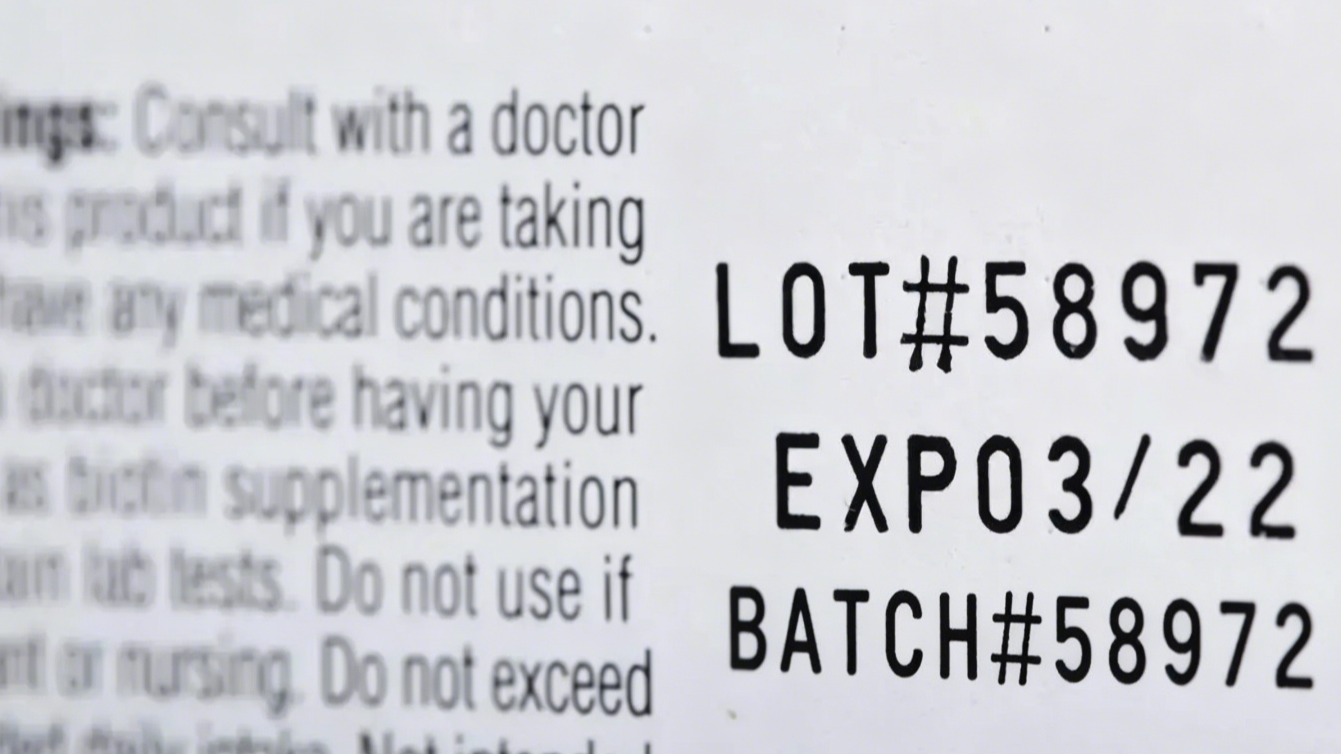
| Expiration Date | The last date a product is safe to use | Consumer safety, stock rotation | "EXP 03/22" |
Why Lot Codes are Critical: Data and Real-World Applications
Food & Beverage Traceability
In food production, lot codes help meet FSMA 204 traceability rules. If a contamination issue pops up, the lot code lets you pull just the affected batch—not every item you've ever made. That saves money, reduces waste, and protects your brand.
Example: A dairy company prints lot codes on milk cartons. When a quality issue is traced to one production day, the lot code tells them exactly which cartons to pull.
Pharmaceuticals & Medical Devices
Drug manufacturers must assign a unique lot number to every batch under FDA 21 CFR Part 211. Medical devices follow similar UDI (Unique Device Identification) rules. These codes ensure that if a problem arises, you can trace it back to the exact production run.
Automotive & Electronics Manufacturing
Car and electronics makers use lot codes to track parts across complex supply chains. If a component fails, the lot code helps identify which batch of materials or which production line caused the issue—so you can fix it and prevent it from happening again.
Federal Regulations and Lot Code Compliance
Lot codes aren't optional in many industries. Here's what the law requires:
- FDA 21 CFR Part 211 (Pharmaceuticals): Every batch of drug product must have a unique lot or control number linked to production and quality records.
- FSMA 204 (Food Traceability): If you handle foods on the FDA's Food Traceability List, you must maintain Traceability Lot Codes (TLCs) and share records within 24 hours of a request. The compliance deadline is July 20, 2028.
- ISO 9001 (Quality Management): Requires traceability throughout production and delivery. Lot codes are a key part of that.
- UDI (Medical Devices): Requires a Unique Device Identifier that includes production details like lot number, serial number, and expiration date.
How to Print Lot Codes on Product Packaging
Printing lot codes clearly and durably takes the right equipment. Here are two common solutions:
Handheld Lot Code Printers
If you need flexibility—multiple lines, temporary sites, or seasonal runs—handheld lot code printers are a great choice. These battery-powered devices print directly on packaging, so you don't need pre-printed labels or fixed stations.
Key advantages:
- Print on any surface: cardboard, wood, plastic, glass, metal
- Choose water-based ink for porous surfaces or solvent-based for non-porous materials
- Variable data support: load batch numbers, dates, and serial codes via USB
- Minimal maintenance: replace cartridge when ink runs out
Inline Thermal Inkjet (TIJ) Printers
For high-volume production, inline TIJ printers mount directly on the conveyor. They print automatically as items pass by, triggered by photoelectric sensors. Bentsai printers can be mounted on brackets with sensors for seamless integration.
Frequently Asked Questions
Q1: How do you read a lot code?
A lot code usually includes the production date (often as a Julian date), the plant location, a product code, and sometimes a shift or line identifier. For example, "PL-07-165-26-A" means Plant A, Product 07, made on day 165 of 2026, Shift A. Formats vary by company.
Q2: Is a lot code the same as an expiration date?
No. A lot code identifies the production batch. An expiration date tells you when the product is no longer safe or effective. Both are often printed together, but they serve different purposes.
Q3: Are lot codes legally required on packaging?
Yes, in many regulated industries. The FDA requires lot codes on most food, drug, and medical products under 21 CFR Part 211, FSMA 204, and UDI regulations. The exact format isn't mandated—but having a traceable lot code is.
About the Author

Matty Chen is an Inkjet Application Engineer, and BENTSAI Inkjet Printing technology Consultant. He specializes in industrial inkjet printing technologies, with a focus on handheld printers, thermal inkjet systems, and coding solutions. His work explores ink performance, material compatibility, and practical printing applications for businesses across manufacturing, packaging, and product customization industries.

The Ultimate Guide to Lot Numbers: Benefits, Industry Applications, and Traceability
Ask Question
No questions and answers

