The Ultimate Guide to Lot Numbers: Benefits, Industry Applications, and Traceability
Why use batch numbers?
In short: traceability and compliance.
- Traceability: Lot numbers let you track every product from raw materials to the end customer. When something goes wrong, you know exactly which batch is affected.
- Compliance: Regulatory bodies like the FDA require lot numbers on most food, drug, and medical products. Without them, your business risks fines, recalls, and lost trust.
What is a Lot Number?
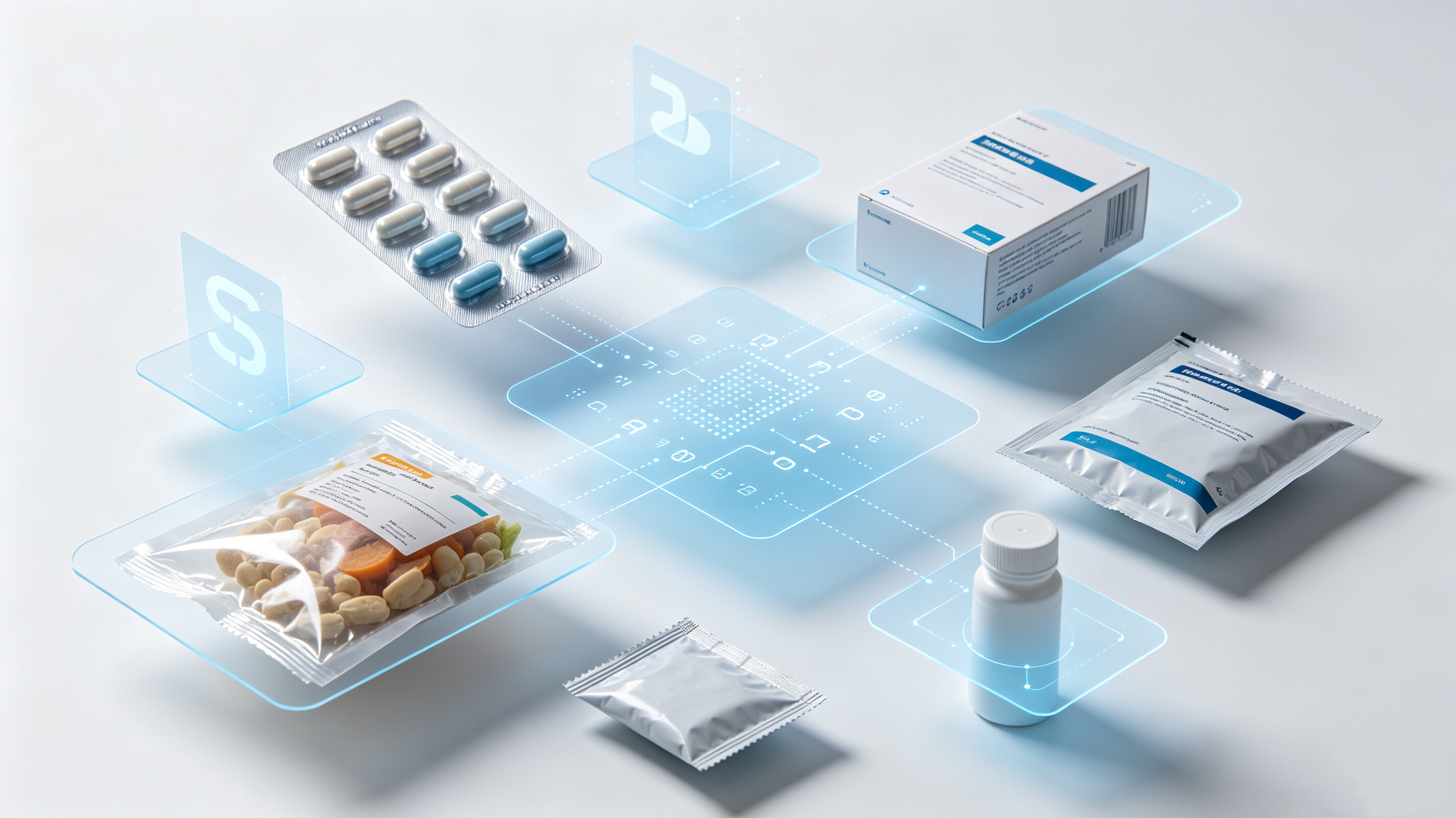
A lot number (or lot code) is a unique alphanumeric identifier assigned to a specific batch of products manufactured under identical conditions. It links a finished product back to its production date, raw materials, equipment, and quality control records.
Key characteristics:
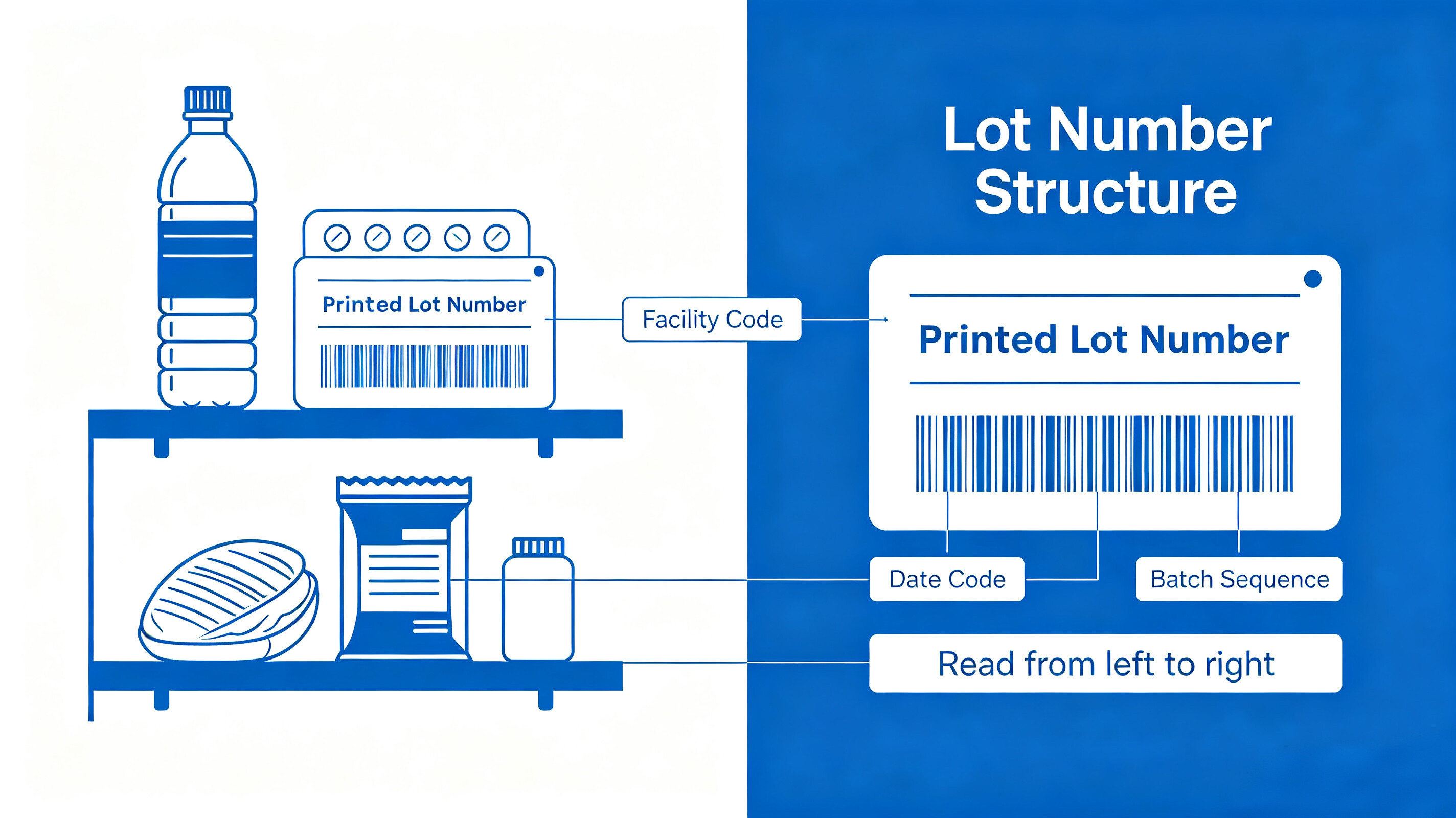
- Format: Typically a combination of letters, numbers, and sometimes symbols. Common elements include production date (Julian date), facility code, shift identifier, and product code.
- Purpose: Enables traceability from production through distribution to the end consumer. Used for recalls, quality investigations, and inventory management.
For more detail on how lot codes are structured and used, see our guide: "what is a lot code"
Lot Number vs. SKU vs. Serial Number
These three identifiers serve different purposes in inventory and traceability. Here's how they compare:
7 Core Benefits of Using Lot Numbers in Manufacturing and Retail
1. Streamlined Product Recalls and Risk Management
When a contamination issue or defect is discovered, lot numbers let you isolate the exact batch affected. Instead of recalling every unit on the market, you pull only the problematic batch. This saves millions in recall costs and protects your brand reputation.
2. Mandatory Regulatory Compliance
The FDA's FSMA 204 Traceability Rule requires businesses that handle foods on the Food Traceability List (FTL) to maintain traceability lot codes (TLCs) and share records within 24 hours of a request. Similar requirements exist for pharmaceuticals under 21 CFR Part 211 and for medical devices under UDI regulations. Lot numbers are the foundation of these compliance frameworks.
3. Advanced Inventory Control (FIFO & FEFO)
Lot numbers enable First-In-First-Out (FIFO) and First-Expired-First-Out (FEFO) inventory management. Warehouse staff can identify which batches to ship first, reducing expired or obsolete stock. This is especially critical in food, beverage, and pharmaceutical supply chains.
4. Defect Clustering and Quality Assurance
When a quality issue emerges, lot numbers help you trace the problem back to a specific production run. You can identify whether the defect came from a particular raw material batch, a piece of equipment, or a shift. This data drives continuous improvement and prevents repeat issues.
5. Supply Chain Transparency and Anti-Counterfeiting
Lot numbers make counterfeiting harder. A counterfeit product without a valid lot number stands out. For consumers and retailers, the ability to verify lot numbers adds trust. For brands, it protects revenue and reputation.
6. Automated Data Integration with ERP Systems
Modern lot numbers are designed to be machine-readable. QR codes and barcodes encode lot information that integrates directly with ERP and WMS systems. This automation reduces manual data entry errors and speeds up receiving, shipping, and inventory counting.
7. Enhanced Brand Trust and Consumer Communication
Consumers are increasingly concerned about product origins, safety, and authenticity. Lot numbers—especially when combined with QR codes—let brands share detailed information: where ingredients came from, when the product was made, and how to check authenticity. This transparency builds loyalty.
Real-World Industry Applications and Regulatory Requirements
Lot numbers are mandatory across multiple regulated industries:
- Food & Beverage: FSMA 204 requires Traceability Lot Codes (TLCs) for foods on the Food Traceability List, with compliance by July 20, 2028. QR codes and DataMatrix codes on packaging help meet digital traceability requirements. For more on food and beverage coding, see our industry solutions.
- Pharmaceuticals: 21 CFR Part 211 requires lot numbers on every drug container, linking each batch to production records. Medical devices must also comply with UDI labeling rules.
- Dietary Supplements: 21 CFR Part 111 mandates batch or lot numbers on finished product labels.
- Industrial Manufacturing: Lot codes support ISO 9001 quality management and defect tracking across production lines.
In each case, legible, scannable codes are essential. Bentsai handheld printers deliver the resolution and ink compatibility needed for compliance across all these industries.
How to Create and Read a Lot Number Format
There is no single mandated format for lot numbers. However, effective lot codes typically include:
Step-by-step breakdown of a standard format:
- Facility Code: 2-3 letters identifying the manufacturing plant (e.g., "PL" for Plant A)
- Product Code: 2-4 digits identifying the specific product (e.g., "07" for product variant)
- Julian Date: 3 digits representing the day of the year (e.g., "165" = June 14th)
- Year: 2 digits for the production year (e.g., "26" = 2026)
- Shift or Line Identifier: 1-2 characters indicating production shift or line (e.g., "A")
Example: PL-07-165-26-A = Plant A, Product 07, made on day 165 of 2026, shift A.

Best Practices for Printing Lot Numbers on Products
To ensure lot numbers remain readable throughout the supply chain, follow these guidelines:
- Substrate: Understand your packaging surface. Porous materials (cardboard, wood) need water-based ink. Non-porous surfaces (plastic, glass, metal) require solvent-based fast-dry ink.
- Ink Type: Choose ink that withstands your product's environment: moisture, temperature extremes, UV exposure, and abrasion. Always test ink-surface compatibility before full production.
- Hardware: Use high-resolution printing equipment (300-600 DPI) to ensure scannable barcodes and legible text. For small batches or multiple production lines, handheld printers offer flexibility.
The Bentsai BT-HH6105F is a lightweight, high-resolution handheld printer ideal for lot number printing on diverse surfaces. It supports both water-based and solvent-based inks and offers adjustable 300/600 DPI resolution.
Frequently Asked Questions
- Where do I find the lot number on packaging?
Lot numbers are typically printed on the outer carton, the immediate container label, or directly on the product itself (e.g., bottom of a can, side of a box). Regulations often require it to be in a prominent, easily visible location.
- Are lot numbers and batch codes the same thing?
Yes. The terms are used interchangeably. "Lot number," "batch code," "batch number," and "lot code" all refer to the same identifier for a specific production run.
References
About the Author

Matty Chen is an Inkjet Application Engineer, and BENTSAI Inkjet Printing technology Consultant. He specializes in industrial inkjet printing technologies, with a focus on handheld printers, thermal inkjet systems, and coding solutions. His work explores ink performance, material compatibility, and practical printing applications for businesses across manufacturing, packaging, and product customization industries.

Ask Question
No questions and answers

