How to Mark PVC, Structural Steel, and Metal Tubes Without Smudging
Smudged codes on PVC, steel, and metal tubes aren't just a cosmetic problem. They cost time, money, and compliance.
- Rework and delays: When a code can't be read, the part gets pulled, re-marked, or scrapped.
- Traceability failures: Unreadable lot codes break the audit trail and trigger regulatory issues.
- Wasted materials: Re-marking means extra ink, extra labor, and extra downtime.
This guide covers four field-tested practices for getting clean, permanent marks on non-porous tubing—and why handheld printers are the practical solution.
The High Cost of Smudged Codes on Non-Porous Industrial Materials
Non-porous materials are the hardest surfaces to mark. PVC, steel, and aluminum don't absorb ink—they repel it. The ink sits on the surface and can smear, flake, or fade when the part is handled, stacked, or exposed to moisture.
The costs add up fast:
- Re-marking labor: Every smudged code means someone has to find the part and mark it again.
- Scrapped parts: In some cases, the part is too damaged to re-mark and gets discarded.
- Compliance risk: Unreadable lot codes fail traceability audits and can trigger fines or recalls.
- Customer rejections: If a buyer can't scan the code, the shipment may be rejected.
The root cause is usually simple: the wrong ink, a dirty surface, or poor print technique.
4 Field-Tested Best Practices for Smudge-Free Marking on PVC and Steel
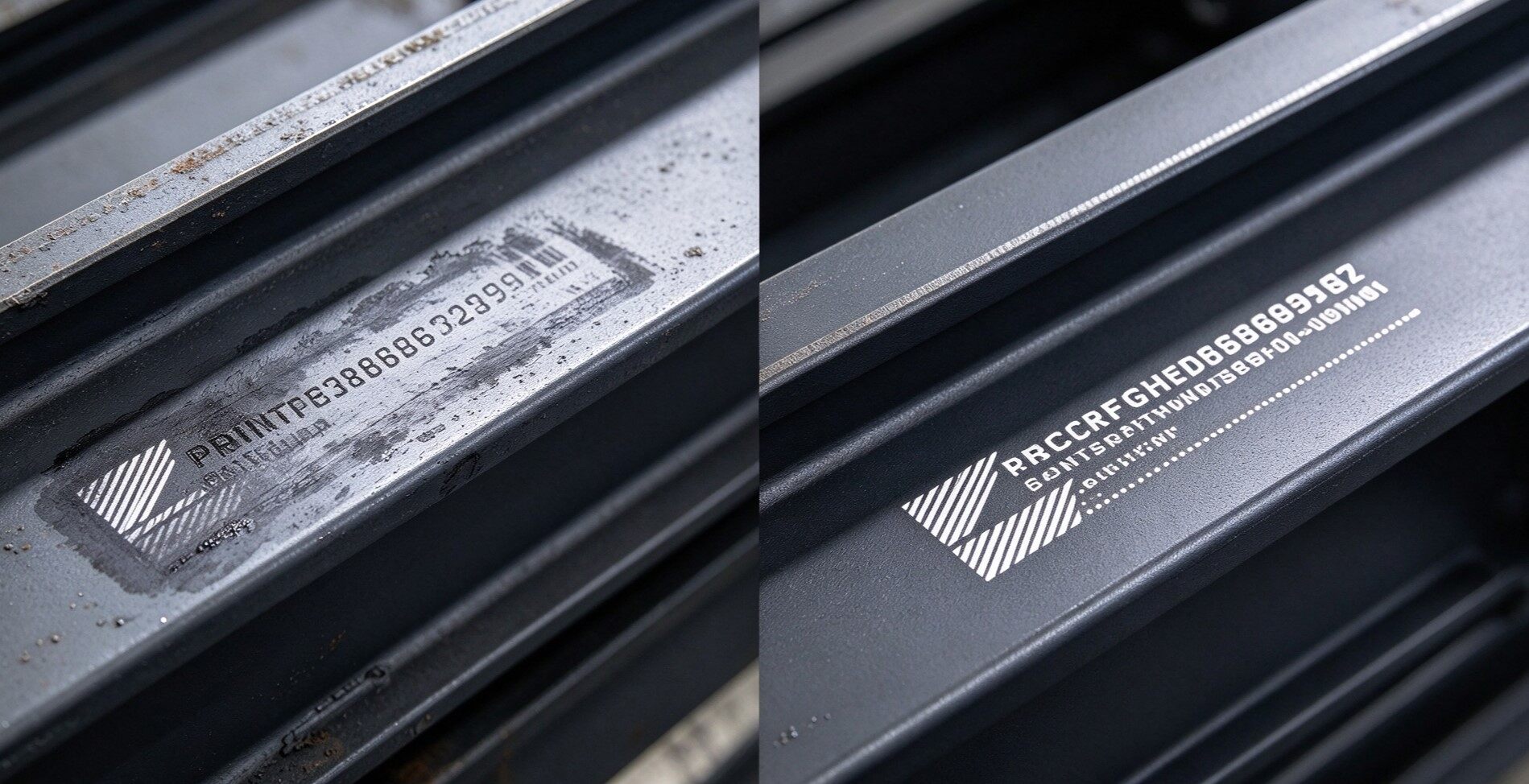
1. Switch Exclusively to Solvent-Based, Fast-Drying Inks
Water-based inks don't work on PVC or steel. They bead up, sit on the surface, and wipe off with a finger. For non-porous materials, you need solvent-based ink.
Solvent inks contain fast-evaporating chemicals that slightly soften the plastic or metal surface, creating a chemical bond. They dry in seconds—typically 2 to 5 seconds—and resist smudging, moisture, and abrasion.
Bentsai handheld printers use solvent-based cartridges for non-porous surfaces including PVC, metal, and glass. The ink is waterproof and designed to hold up under normal industrial handling.
2. Implement a Rapid Surface Pre-Wipe Protocol
Dirt, oil, and dust block ink adhesion. On a factory floor, pipes and steel often arrive with a film of oil, rust dust, or handling residue.
The fix: A quick wipe with isopropyl alcohol (IPA) or a clean shop cloth before printing. It takes seconds and dramatically improves ink bonding. Don't skip this step—especially on steel that's been stored outdoors or handled with gloves.
3. Utilize Thermal Inkjet (TIJ) Technology Over Manual Stenciling
Manual stenciling and paint markers are slow, inconsistent, and prone to smudging. They also can't handle variable data like batch numbers that change every run.
Thermal Inkjet (TIJ) printers use heated resistors to fire precise ink droplets onto the surface. The result is sharp, high-resolution marks that dry fast and look professional. TIJ printers also support variable data—you can change the batch code, date, or serial number without stopping production.
Bentsai handheld TIJ printers deliver 300 to 600 DPI resolution, which means barcodes and small text stay readable even on curved pipes.
4. Optimize the Printhead-to-Surface Distance
Print quality depends on keeping the printhead at the right distance from the surface. For TIJ printers, the optimal range is 2 to 5mm.
- Too close: Ink smears or the printhead drags on the surface.
- Too far: Droplets spread, and the mark becomes fuzzy.
On curved pipes, use the positioning plate (included with Bentsai printers) to maintain a consistent distance as you move along the curve.
Why Handheld Inkjet Printers are the Ideal Solution for Pipes and Steel
Handheld printers solve the problems that make marking PVC and steel difficult.
Advantages compared to traditional printers:
- Portability: Take the printer to the pipe, not the other way around. No need to move heavy steel to a fixed station.
- No setup time: Unbox, load a cartridge, and start printing in minutes.
- Variable data support: Print batch codes, serial numbers, and dates from USB-loaded files.
- Multi-surface capability: One printer handles PVC, steel, aluminum, and more with the right cartridge.
- Low maintenance: The printhead is in the cartridge; replace it when ink runs out. No pumps, filters, or solvents to manage.
- Cost-effective: Entry-level models start at $420, with no installation fees or service contracts.
Explore handheld inkjet printers for smudge-free marking on non-porous industrial materials.
In Conclusion
Smudged codes on PVC and steel aren't inevitable—they're a sign of the wrong ink or the wrong technique. Switch to solvent-based fast-drying ink, wipe the surface before printing, use TIJ technology instead of stencils, and keep the printhead at the right distance. Handheld printers make all four practices easy to implement, with no fixed installation and minimal training required.
About the Author

Matty Chen is an Inkjet Application Engineer, and BENTSAI Inkjet Printing technology Consultant. He specializes in industrial inkjet printing technologies, with a focus on handheld printers, thermal inkjet systems, and coding solutions. His work explores ink performance, material compatibility, and practical printing applications for businesses across manufacturing, packaging, and product customization industries.
Ask Question
No questions and answers

