Lot & Batch Coding 101: Formats, Generation, and Best Practices
Lot and batch codes are essential for product traceability, but getting them right takes more than just printing a number on a box. This guide walks you through the full picture—how to structure a code that actually works for your production line, how to generate lot numbers consistently, and how to choose printing equipment that fits your volume and surface types. Whether you're setting up a coding system for the first time or improving an existing one, here's what you'll learn:
- Code structure: What components make up an effective lot or batch code, and how to format them for clarity and traceability.
- Generation process: A step-by-step approach to creating lot numbers that stay consistent across production runs.
- Equipment selection: How to match the right printer to your production volume, surface materials, and mobility needs.
What is Lot and Batch Coding?
1. Core definition
A batch code describes how and when a product was made. It covers a specific quantity produced together in a single run, shift, or machine cycle under the same conditions. Factories and quality teams use batch codes internally to track recipes, raw materials, machine settings, and processing steps.
A lot code describes how products are grouped, packaged, and released. A lot can be a single batch, multiple batches packed together on the same day, or just a portion of a batch. It's the code consumers and retailers see on the package, and it's the primary identifier for inventory management and public recalls.
2. Key differences between lot numbers and batch numbers
The terms are often used interchangeably, but they serve different purposes:
- Batch code = production. It tells you how and when a product was made. It's an internal tool for factory and QA teams.
- Lot code = traceability and distribution. It tells you how products were grouped and released. It's the customer-facing code used for inventory and recalls.
In short: a batch is always the full run. A lot is sometimes the full run, sometimes a slice of it. But most companies don't make this distinction—they just pick one term and stick with it.
3. The role of coding in supply chain visibility
Both codes create visibility, but at different levels:
- Batch codes give factory teams the data they need to trace quality issues back to specific runs, machines, or raw material lots. This supports internal quality control and continuous improvement.
- Lot codes give retailers, distributors, and consumers a single identifier to track products through the supply chain. When a recall happens, the lot code tells you exactly which packages to pull.
Together, they form a complete picture: batch codes explain how something was made, and lot codes show where it went.
Why Lot and Batch Coding Matter for Your Business
- Regulatory compliance: The FDA requires lot codes on most food, drug, and medical products. FSMA 204 mandates Traceability Lot Codes (TLCs) for foods on the Food Traceability List, with compliance by July 20, 2028.
- Rapid and precise product recalls: When a contamination issue arises, lot codes let you isolate the exact batch affected. Instead of recalling every unit on the market, you pull only the problematic run.
- Inventory management optimization: Lot codes enable First-In-First-Out (FIFO) and First-Expired-First-Out (FEFO) stock rotation. Warehouse staff know which batches to ship first, reducing expired or obsolete stock.
- Accountability and quality control: When a defect appears, the lot code traces it back to a specific production run, equipment, or raw material batch. This data drives continuous improvement.
What Format Should a Lot Number Take?
1. Standard alphanumeric naming conventions
There is no single mandated format for lot numbers. The FDA does not prescribe a fixed structure—manufacturers can design their own numbering system as long as it allows traceability back to production records. However, most effective lot codes follow a consistent alphanumeric pattern.
2. Key components embedded within a lot code
A well-designed lot code typically includes:
- Facility code: 2-3 letters identifying the manufacturing plant (e.g., "PL" for Plant A)
- Product code: 2-4 digits identifying the specific product variant
- Julian date: 3 digits representing the day of the year (e.g., "165" = June 14th)
- Year: 2 digits for the production year (e.g., "26" = 2026)
- Shift or line identifier: 1-2 characters indicating production shift or line (e.g., "A")
3. Structure examples
Example 1: Julian Date Format
LOT-2405-A
- 24 = Year (2024)
- 05 = Day of production
- A = Shift
Example 2: Full Alphanumeric Format
PL-07-165-26-A
PL = Facility code (Plant A)
07 = Product code
165 = Julian date (June 14th)
26 = Year (2026)
A = Shift A
Step-by-Step Guide: How to Generate Lot Numbers
- Choose your components: Decide which data points your lot code needs to include. At minimum: production date and a unique sequence number. Add facility, product, and shift codes if you need finer traceability.
- Define your format: Write out the structure. For example: [Facility]-[Product]-[Julian Date]-[Year]-[Shift]. Keep it consistent across all products.
- Set up a numbering system: For manual operations, a simple spreadsheet can track sequence numbers. For higher volumes, a database or ERP system can auto-generate lot codes for each production run.
- Test your format: Before full production, print sample codes and verify that every component is legible and in the right order.
- Document the system: Write down your format rules so anyone in the company can read and understand a lot code. This documentation is also useful during audits.
Selecting the Right Printing Equipment for Lot and Batch Coding
1. For maximum mobility and multi-surface marking
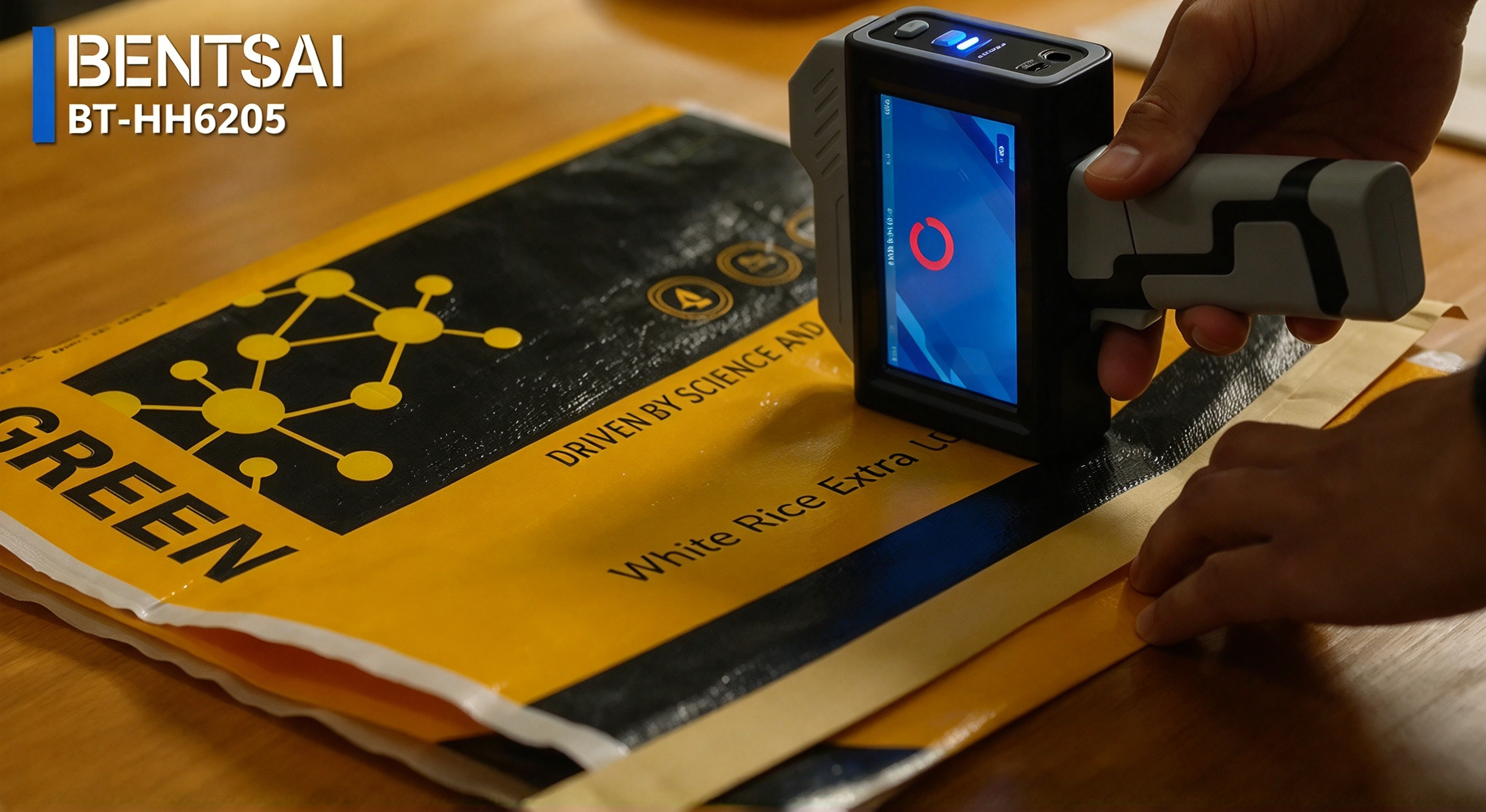
Handheld inkjet printers are ideal for businesses that need to print lot codes on multiple lines, in different locations, or on large or awkward items. They are battery-powered, portable, and can print on porous and non-porous surfaces with the right ink. Explore Bentsai handheld inkjet lot code printers for portable solutions.
2. On production line automated for high-speed continuous output
For high-volume manufacturing, inline printers mounted on the conveyor print lot codes automatically as items pass by. Photoelectric sensors trigger each print, eliminating manual intervention. These systems integrate with existing production lines for continuous, hands-free coding. See production line batch coding machines for automated options.
3. Large character printing for boxes, crates, and cartons
When you need large, highly visible lot codes on shipping boxes, pallets, or crates, wide-format handheld printers (like the Bentsai B80 or B85) offer print heights up to 92mm. These are ideal for logistics and warehousing applications where codes need to be readable from a distance.
Best Practices for Lot and Batch Code Placement and Durability
- Print on a clean surface: Dust, oil, or moisture prevent ink adhesion. Wipe the surface before printing.
- Choose the right ink for your substrate: Water-based ink for porous materials (cardboard, wood, paper). Solvent-based fast-dry ink for non-porous surfaces (plastic, glass, metal).
- Keep the code legible: Use sufficient contrast (dark ink on light surface). Avoid printing over seams, folds, or curved areas where the code may distort.
- Test under real conditions: Before full production, test your ink and substrate combination under the conditions the product will face: cold storage, moisture, abrasion, or UV exposure.
- Place the code prominently: The lot number should be easy to find without opening the package. Common locations: outer carton, immediate container label, or directly on the product.
Lot and batch codes are more than a regulatory checkbox—they are the foundation of product safety, quality control, and supply chain visibility. A well-designed code format, paired with the right printing equipment, ensures your products stay traceable from factory floor to end user. Start with a simple, consistent format. Choose a printer that matches your production environment. And always test before full production.
About the Author

Matty Chen is an Inkjet Application Engineer, and BENTSAI Inkjet Printing technology Consultant. He specializes in industrial inkjet printing technologies, with a focus on handheld printers, thermal inkjet systems, and coding solutions. His work explores ink performance, material compatibility, and practical printing applications for businesses across manufacturing, packaging, and product customization industries.
Ask Question
No questions and answers

