Top 10 Innovative QR Code Applications for Business & Industrial Packaging
QR codes have evolved far beyond simple marketing gimmicks. In 2026, they're essential tools for supply chain traceability, regulatory compliance, anti-counterfeiting, and customer engagement. With GS1 Sunrise 2027 driving the shift to 2D barcodes at retail point-of-sale, businesses across industries are adopting QR codes for everything from EU Digital Product Passports to warehouse automation. This guide covers 10 practical applications—and how to print them reliably on industrial surfaces.
What Are QR Codes?
A QR Code (Quick Response Code) is a two-dimensional matrix barcode that stores information in both horizontal and vertical directions. Unlike traditional 1D barcodes (which hold only 20-30 characters), QR codes can store up to 7,089 numeric characters or 4,296 alphanumeric characters in a space smaller than a postage stamp.
Technical structure:
- Positioning patterns: Three large squares in the corners that allow scanners to detect orientation
- Alignment patterns: Smaller squares that correct for distortion
- Timing patterns: Alternating modules that define grid size
- Data and error correction: Actual content plus recovery data (up to 30% of the code can be damaged and still readable).
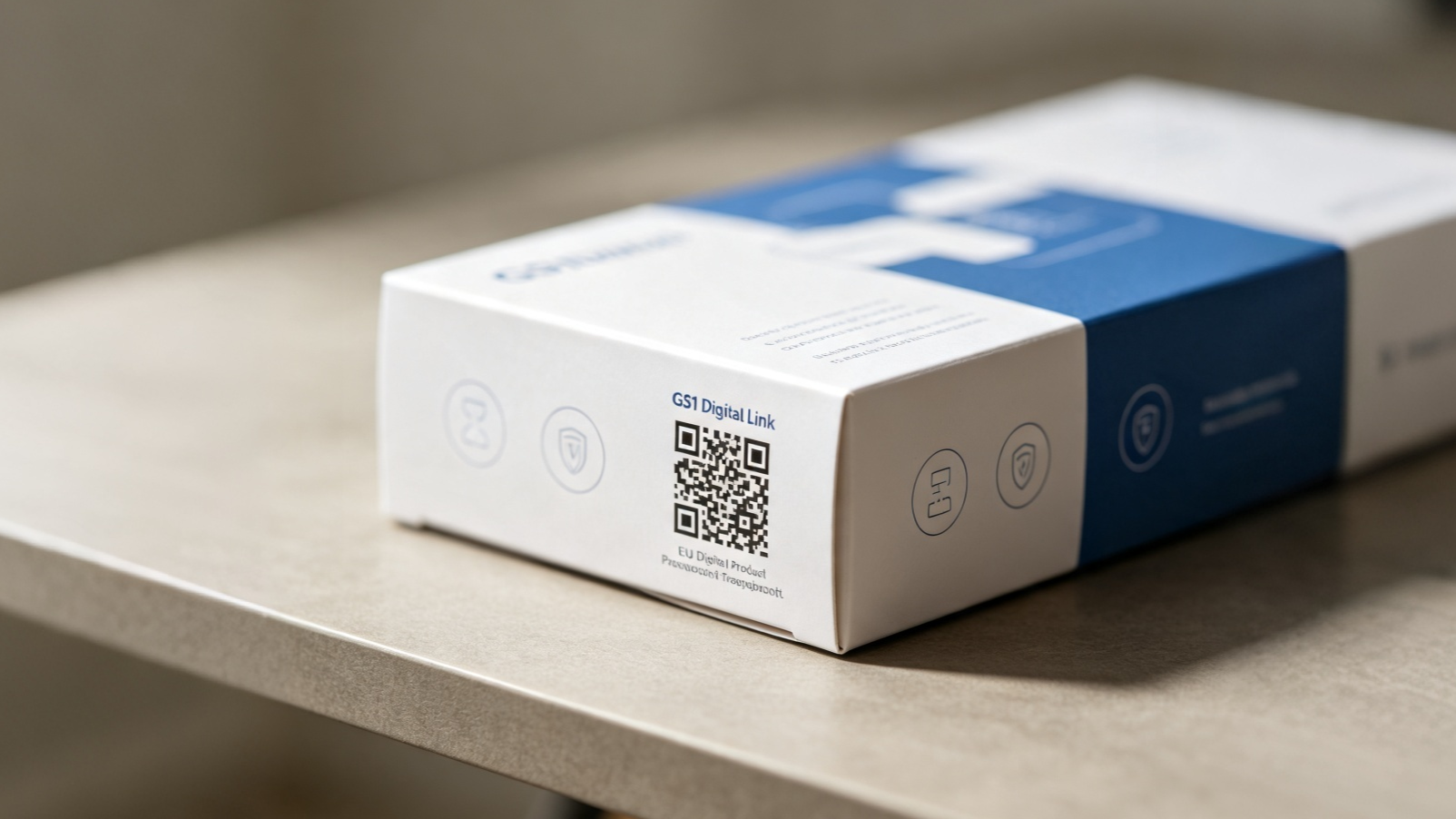
QR codes are standardized under ISO/IEC 18004 and are now a core component of GS1 Digital Link standards—meaning they can encode GTINs, batch numbers, expiration dates, and web URLs in a single scannable code. This makes them the backbone of Sunrise 2027 compliance.
10 Innovative Ways Businesses and Manufacturers Use QR Codes
1. Smart Product Packaging & EU Digital Product Passport (DPP) Compliance
The EU's Digital Product Passport (DPP) regulation requires products in certain categories—textiles, electronics, batteries, and construction materials—to carry a scannable code linking to lifecycle information. QR codes enable compliance by storing or linking to data on materials, repairs, recycling instructions, and environmental impact.
For manufacturers, this means printing a single QR code that meets regulatory requirements while providing consumers with transparency. The code can direct to a webpage with full product documentation, eliminating the need for bulky paper manuals.
2. Real-Time Inventory Management & Supply Chain Traceability
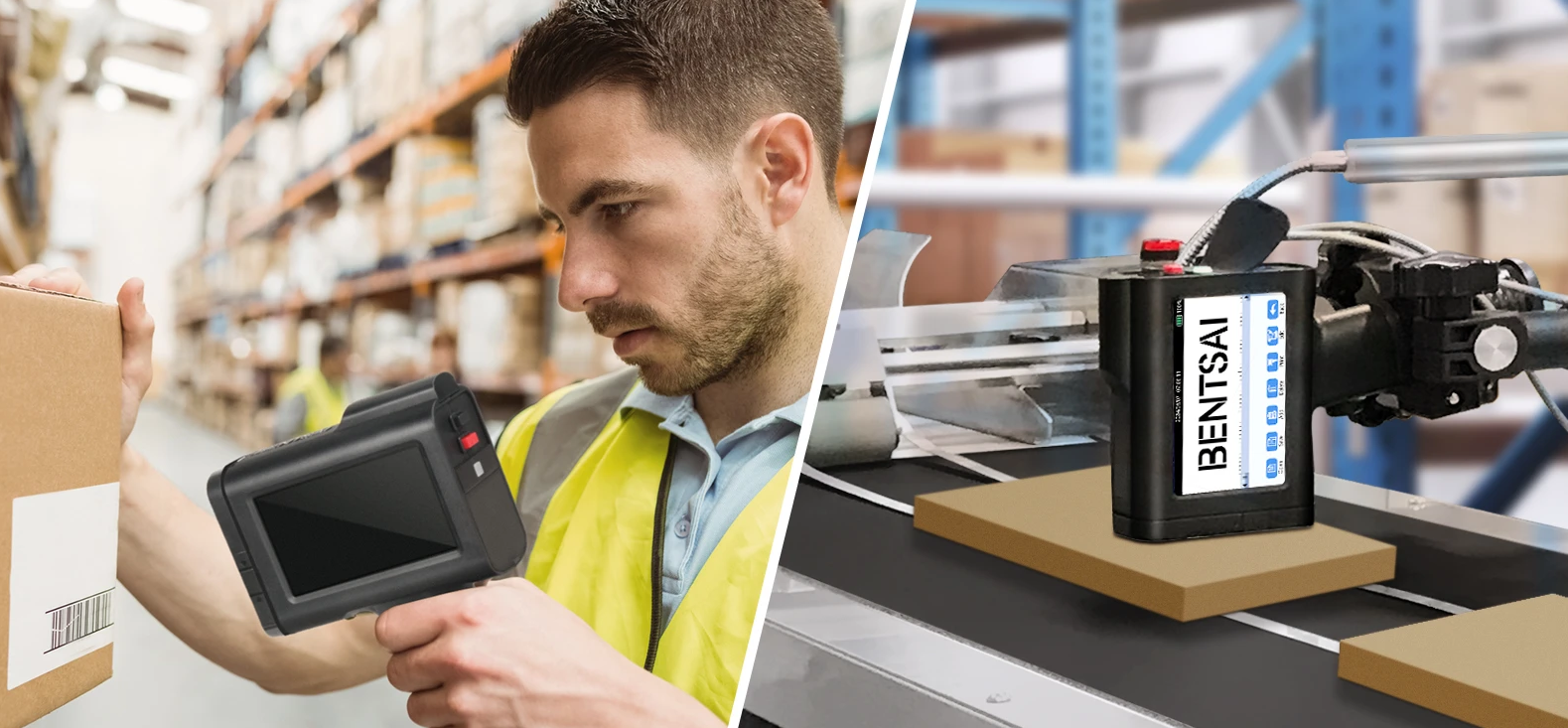
Handheld QR code printers allow warehouse workers to generate codes on demand for incoming shipments, bin locations, and outgoing orders. A single scan captures SKU, quantity, location, and movement history. This eliminates manual data entry, reduces errors, and provides real-time visibility across the supply chain.
For a full range of portable QR code printers, explore Bentsai's handheld solutions designed for on-demand industrial coding.
3. On-Demand Lot, Batch, and Expiration Date Coding
QR codes are replacing traditional linear barcodes for lot and batch tracking. A single QR code can encode the GTIN, batch number, expiration date, and serial number—all in one scan. This is especially valuable for food manufacturers preparing for FSMA 204 traceability requirements and pharmaceutical companies complying with serialization mandates.
For small-batch or multi-SKU production lines, portable printers enable on-demand QR code generation without pre-printed packaging. Fast-dry solvent inks ensure codes remain legible even on plastic bottles and coated materials.
4. Anti-Counterfeiting & Brand Protection in Retail
QR codes with unique serial numbers make counterfeiting significantly harder. Consumers can scan a code on a product to verify its authenticity, seeing a verification page that confirms the serial number hasn't been scanned before. Luxury goods, pharmaceuticals, and automotive parts manufacturers are adopting this approach to protect their brands and consumers.
5. Interactive Marketing & First-Party Data Collection
QR codes bridge physical products and digital engagement. A code on packaging can send consumers to a product registration page, a recipe video, a loyalty reward, or a feedback survey. This gives brands direct access to first-party consumer data—vital for marketing in a post-cookie world. GS1 research shows that 79% of consumers are more likely to purchase a product if the packaging includes a scannable QR code with additional information.
6. Digital User Manuals, Warranties, and Maintenance Logs
QR codes replace printed manuals and warranty cards. A code on the product or packaging directs users to an online manual, warranty registration, or maintenance schedule. For equipment manufacturers, this means users can access up-to-date manuals without needing to store printed copies. For B2B products, QR codes can link to maintenance logs, service history, and spare parts ordering.
7. Healthcare Patient Tracking & Medical Device Identification
Hospitals use QR codes on patient wristbands to match medications and treatments to individuals. Medical device manufacturers use QR codes for UDI (Unique Device Identification) compliance, enabling tracking of devices from production to patient. The high data capacity of QR codes allows storage of device model, serial number, expiration date, and manufacturing details in a single code.
8. Contactless Payments & Digital Transactions
QR codes are the backbone of digital payment systems in many markets. Consumers scan a code to transfer funds, pay at a restaurant, or complete an online purchase. The contactless nature of QR payments—pioneered by systems like Alipay and WeChat Pay—has made them a global standard for mobile transactions.
9. Logistics, Freight Tracking, and Warehouse Automation
Large-format QR codes on pallets and shipping containers enable automated receiving and outbound scanning. A single code can encode the entire shipment manifest, including carrier details, delivery address, and item counts. Warehouse automation systems scan QR codes at each touchpoint, providing real-time tracking without manual data entry.

10. Event Ticketing, Access Control, and Smart Check-Ins
QR codes have replaced paper tickets for events, conferences, and transportation. Each ticket has a unique QR code that is scanned at entry, validating the ticket and preventing fraud. For corporate events, QR codes on badges enable session check-ins, networking, and feedback collection.
Frequently Asked Questions
Q: How to Print High-Resolution QR Codes on Industrial Surfaces?
Printing scannable QR codes requires:
- Resolution of at least 300 DPI for QR codes, with 600 DPI recommended for DataMatrix codes
- High contrast between the code and the background (dark ink on light surface works best)
- Clean, smudge-free application using fast-dry inks that bond to the substrate
- Test scanning before full production to ensure readability across different scanning devices
For cardboard and paper, water-based inks work well. For plastic, glass, metal, and coated packaging, solvent-based inks are required for adhesion and durability. Bentsai handheld printers support both ink types and offer resolution up to 600 DPI for precise QR code printing.
About the Author

Matty Chen is an Inkjet Application Engineer, and BENTSAI Inkjet Printing technology Consultant. He specializes in industrial inkjet printing technologies, with a focus on handheld printers, thermal inkjet systems, and coding solutions. His work explores ink performance, material compatibility, and practical printing applications for businesses across manufacturing, packaging, and product customization industries.

Ask Question
No questions and answers

