Why Direct-to-Package Printing is Replacing Labels in Modern Supply Chains?
For decades, adhesive labels have been the go-to for supply chain labeling—they're familiar, and everyone knows how to use them. But here's the problem supply chain managers are quietly facing: the "hidden costs" that come with those labels.
Consumables add up fast—think about the cost of label rolls, ink cartridges for label printers, and even the release paper that gets thrown away after peeling. Then there's the downtime: label printers jam, need regular maintenance, or run out of supplies mid-shift, slowing down your entire packaging line.
It's no wonder more teams are switching to Thermal Inkjet (TIJ) direct-to-package printing—a solution that cuts through these inefficiencies. In this article, we'll break down how making the switch can reduce your logistics costs by up to 70% and eliminate the waste that's been eating into your budget.
The Hidden Costs and Bottlenecks of Traditional Adhesive Labels
If you're still using adhesive labels, you're probably only tracking the obvious expenses—like the cost of the labels themselves. But the true cost of labels goes far beyond that. Let's break down the three biggest pain points supply chain teams face:
1. Consumables Expenses Add Up Fast
A single roll of adhesive labels might seem cheap, but multiply that by thousands of packages per day, and the numbers get staggering. And it's not just the labels—you also need:
- Specialized ink or toner for label printers
- Replacement parts for label applicators (which break down often)
- Storage costs for keeping extra label rolls on hand
One logistics company we worked with found they were spending $12,000 per month just on label consumables—before factoring in other costs.
2. Operational Downtime Kills Productivity
Label printers are prone to jams, especially when running at high speeds. A single jam can stop your packaging line for 15–30 minutes while your team fixes it. Over a month, those small delays add up to 8–10 hours of lost productivity—time you can't get back.
Worse, if you run out of labels unexpectedly, you're forced to pause operations entirely until new supplies arrive. That's a risk no supply chain manager wants to take.
3. Environmental Waste Hurts Your Bottom Line (and Reputation)
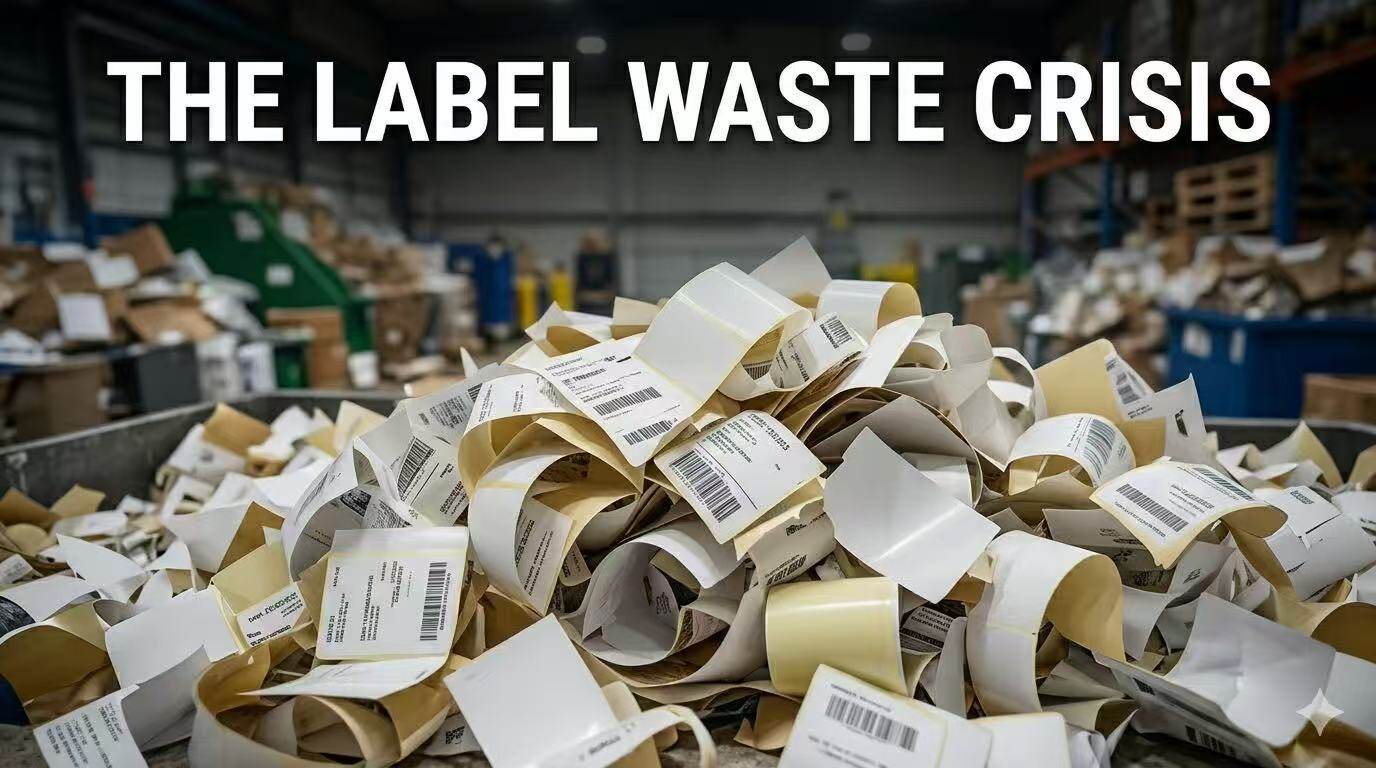
Traditional adhesive labels generate massive waste—specifically, the non-recyclable release paper that peels off when you apply the label. The Self-Adhesive Labels Market report predicts the industry will reach $91.93 billion by 2032, which means even more waste is on the way.
For companies aiming to cut their carbon footprint (or meet sustainability goals from customers), this waste is a major problem. It also adds to your waste disposal costs—another hidden expense you don't need.
Direct-to-Package Printing vs. Labels: A Data-Driven Cost Comparison
Numbers don't lie—and when you compare direct-to-package printing to traditional labels, the savings are impossible to ignore. Let's look at a real-world example from a mid-sized logistics company that ships 50,000 packages per month:
| Cost Category | Traditional Adhesive Labels | TIJ Direct-to-Package Printing |
| Consumables (labels, ink) | $12,000 | $3,600 |
| Equipment Maintenance | $1,800 | $300 |
| Downtime (lost productivity) | $4,200 | $600 |
| Waste Disposal | $900 | $150 |
| Total Monthly Cost | $18,900 | $4,650 |
That's a 75% reduction in monthly costs—and over a year, that adds up to $171,000 back in your budget. The biggest driver? No more buying expensive label rolls or replacing broken label applicators. With direct-to-package printing, you only pay for the ink you use.
How Bentsai TIJ Inkjet Printers Simplify Logistics and Reduce Costs
Not all direct-to-package printers are created equal—Bentsai's handheld TIJ inkjet printers are designed specifically for supply chain teams who need reliability and efficiency. Here's how they solve the biggest logistics pain points:
High-Speed Automation
Bentsai printers can print up to 120 characters per second—fast enough to keep up with even high-volume packaging lines. Unlike label printers, they don't need to pause to feed labels or adjust alignment. Just glide the printer over your package, and it prints barcodes, shipping labels, or batch numbers instantly.
Improve Warehouse Efficiency
With direct printing, you eliminate the need to store, organize, and track label rolls. One Bentsai customer reduced their warehouse storage space by 15% just by ditching labels—space they now use for more inventory.
You also don't have to worry about label shortages. As long as you have ink (which lasts 2–3x longer than label rolls), you can keep printing—no emergency supply runs required.
Maintenance-Free Operation
Bentsai TIJ printers have no moving parts that can jam or break. That means:
- No regular maintenance checks
- No replacement parts to order
- No training required for your team (most people learn to use it in 5 minutes)
One warehouse manager told us: "We used to have a team member dedicated to fixing label printers. Now that we use Bentsai, that person can focus on more important tasks—like improving our shipping speed."
Operational Steps to Transition Your Packaging Line
Switching from labels to direct-to-package printing doesn't have to be a big, disruptive project. Here's how to do it in 4 simple steps:
Assess Your Current Consumable Spend
First, calculate how much you're really spending on labels. Look at: Monthly cost of label rolls and ink, Maintenance costs for label equipment, Downtime hours caused by label printer issues. This will give you a baseline to measure your savings against.
Evaluate Your Packaging Materials
Direct-to-package printing works on most common packaging materials—corrugated boxes, plastic bags, and even metal cans. Test a Bentsai printer on your most used materials to make sure it meets your quality standards (we offer free samples if you want to try before you buy).
Launch a Pilot Project
Start small—pick one packaging line or one product to test direct printing. This lets you: Train your team without overwhelming them, Measure real-world savings in a low-risk way, Work out any kinks before scaling up. Most of our customers see positive results within the first 2 weeks of their pilot.
Scale and Automate
Once your pilot is successful, roll out direct printing to your other lines. You can even integrate Bentsai printers with your existing warehouse management system (WMS) for fully automated printing—no manual input required.
Conclusion: Why Now Is the Time to Switch
Traditional adhesive labels worked for a time, but they're no longer the most efficient (or cost-effective) option for modern supply chains. With TIJ direct-to-package printing, you can:
- Cut your logistics costs by up to 70%
- Eliminate waste and meet sustainability goals
- Reduce downtime and keep your packaging line running smoothly
Bentsai's handheld TIJ inkjet printers make the switch easy—no big investments, no disruption, and no learning curve. If you're ready to stop wasting money on labels and start saving, it's time to give direct-to-package printing a try.
Ready to eliminate label costs? Explore Bentsai handheld inkjet printers and calculate your potential savings today.
About the Author

Matty Chen is an Inkjet Application Engineer, and BENTSAI Inkjet Printing technology Consultant. He specializes in industrial inkjet printing technologies, with a focus on handheld printers, thermal inkjet systems, and coding solutions. His work explores ink performance, material compatibility, and practical printing applications for businesses across manufacturing, packaging, and product customization industries.

The Ultimate Guide for Logo Printing: How to Print Logos On Anything Using a Handheld Printer
Ask Question
No questions and answers

