Food & Beverage Date Coding: Laws, Best-By Regulations, and Ink Safety Standards
A date code is the printed date on food packaging—like "Best if Used By" or "Use-By." It tells you when the product was made and when it's at its best.
This article covers three things:
- what those dates actually mean legally
- why confusing labels cause so much food waste
- how to pick inks that are safe for food packaging.
If you're printing dates on food products, this is what you need to know.
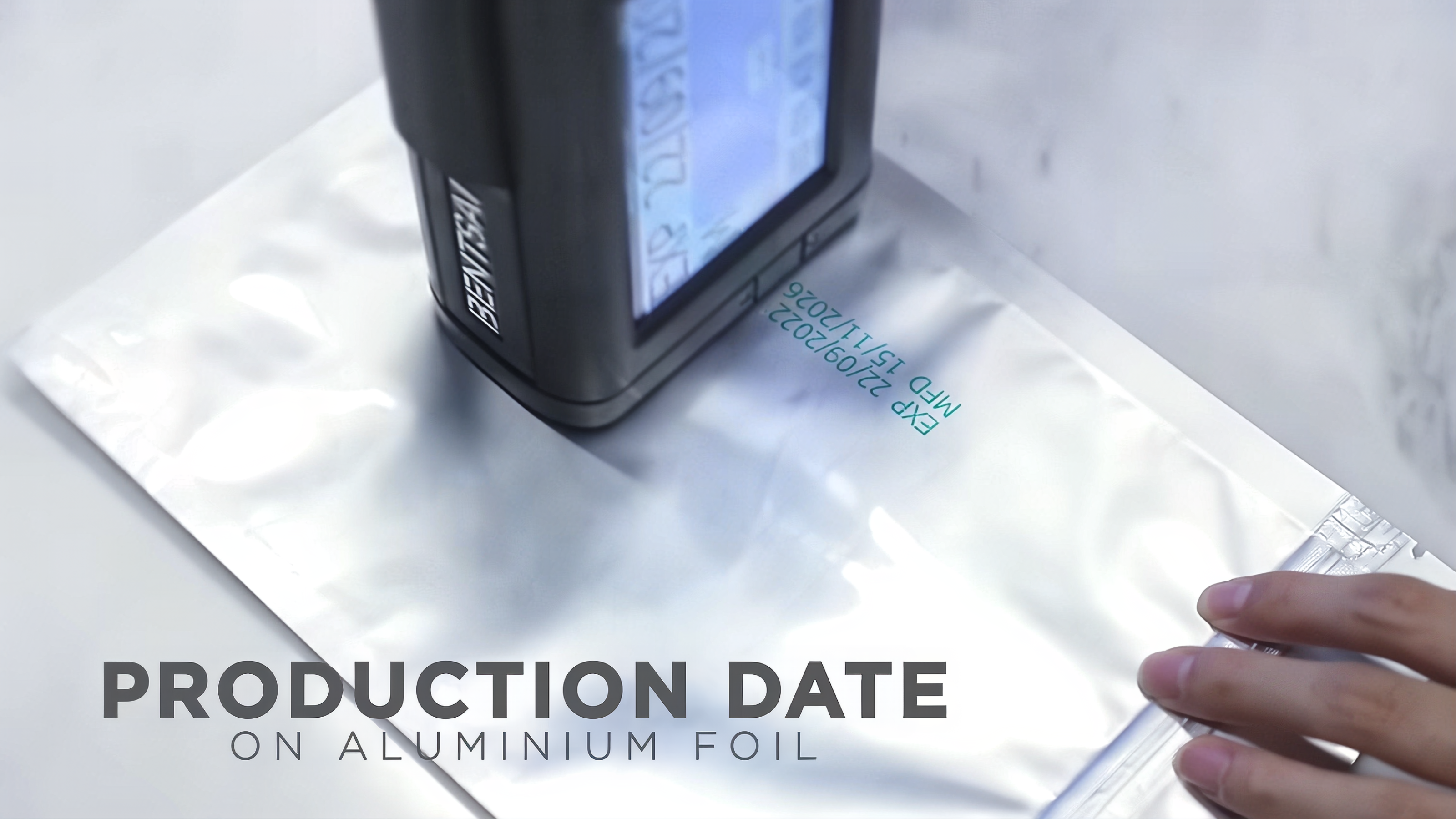
The Critical Role of Date Coding in the Food and Beverage Industry
Why Date Coding Matters Beyond Compliance
Date codes aren't just for inspectors. They help your warehouse ship the oldest stock first. They help retailers know what to pull. And when something goes wrong, they tell you exactly which batch to recall—not everything you've ever made.
The Intersection of Food Safety, Supply Chain Transparency and Waste Reduction
A good date code does three jobs at once:
- keeps food safe by supporting recalls
- keeps the supply chain moving by telling everyone which stock to move first
- reduces waste—but only if the date is clear and people understand what it means
Food Labels: Laws and Regulations Interpretation
"Best-If-Used-By" vs. "Use-By": Understanding Quality vs. Safety
Here's the simple difference:
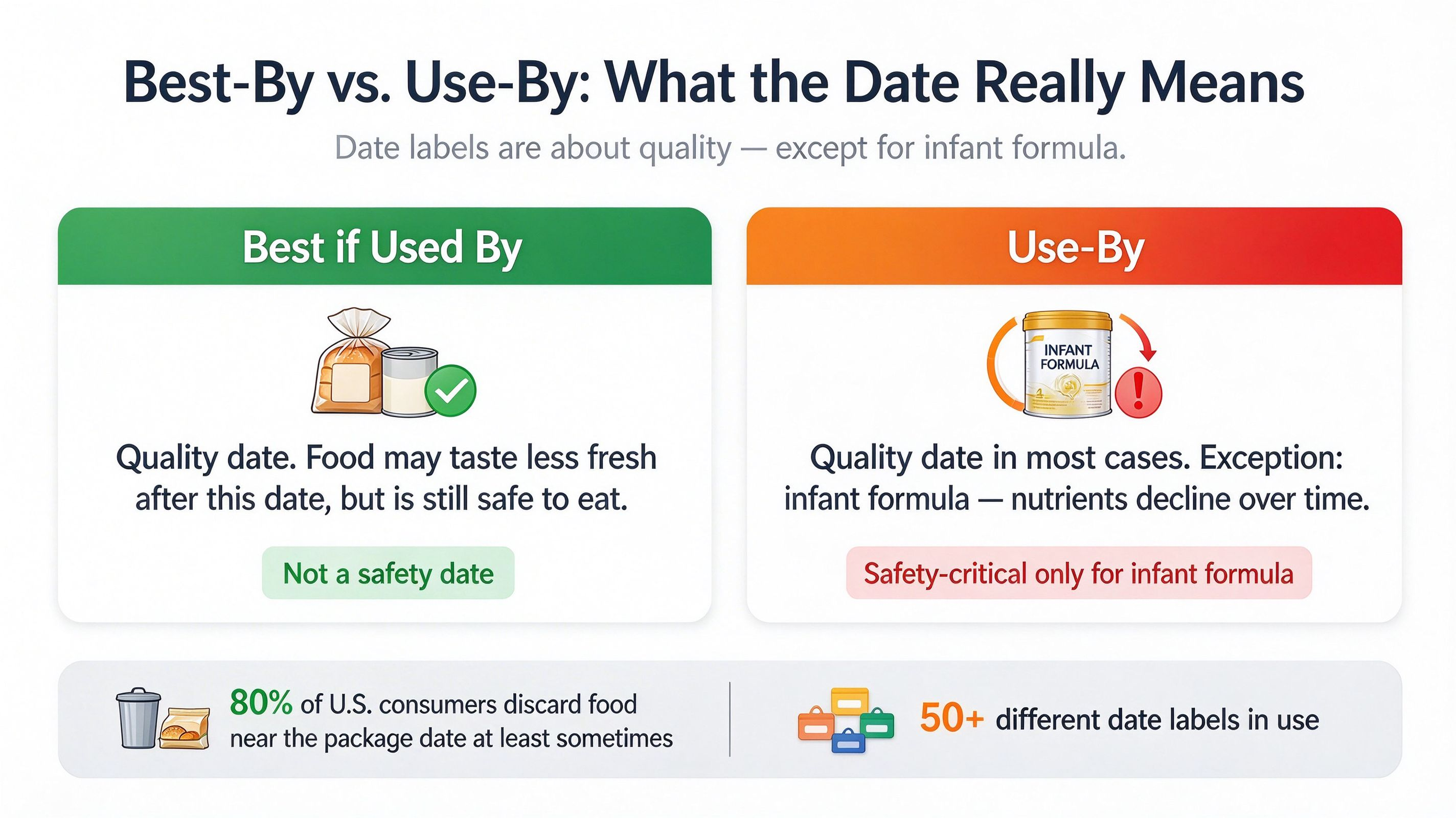
- "Best if Used By" is about quality. It means the food might not taste as fresh after that date—but it's still safe to eat.
- "Use-By" is also about quality in most cases. The one big exception is infant formula. The government requires a "Use-By" date on formula because the nutrients break down over time. For babies relying only on formula, that matters.
Federal Guidelines and the Absence of Uniform Mandates (Except Infant Formula)
Most people assume date labels are required by law. They're not. The U.S. government doesn't require date labels on most foods. Infant formula is the only exception.
The USDA recommends that companies who do print dates use the phrase "Best if Used By." Why? Because research shows consumers understand it as a quality date, not a safety warning.
Global Regulatory Overviews: FDA, USDA, and International Frameworks
In the U.S., the FDA handles most food labeling. The USDA handles meat, poultry, and eggs. Neither one requires date labels on most products.
Other countries have different rules. The EU separates "Best before" (quality) from "Use by" (safety). The UK, Australia, and other markets have their own standards. If you export, check each market separately—there's no global standard.
The Hidden Cost of Confusion: Food Waste and Consumer Behavior
Statistical Overview of Premature Food Discarding
Confusing labels cause real waste. According to the Associated Press, more than 80% of U.S. consumers throw food away at least sometimes when it gets close to the package date. Researchers found more than 50 different date labels in use across the country—no wonder people are confused.
The USDA estimates that 30% of the food supply is wasted at the retail and consumer level. Some of that is because people misread the date and toss food that's still perfectly good.
Source: AP News, Johns Hopkins
How Clear and Standardized Coding Mitigates Supply Chain and Retail Waste
Clear codes help everyone. Retailers can rotate stock properly. Consumers know what the date actually means. And when a recall happens, you pull only the affected batch—not the whole product line.
Food-Grade Ink Safety Standards and Regulatory Compliance
What Makes an Ink "Food-Grade"?
"Food-grade" isn't a single certificate. It means the ink has been tested and is safe for how it's used. The key question is: does the ink touch the food, or just the packaging?
Direct contact means the ink might touch the food—like printing on eggs or capsules. These inks must be made with edible ingredients.
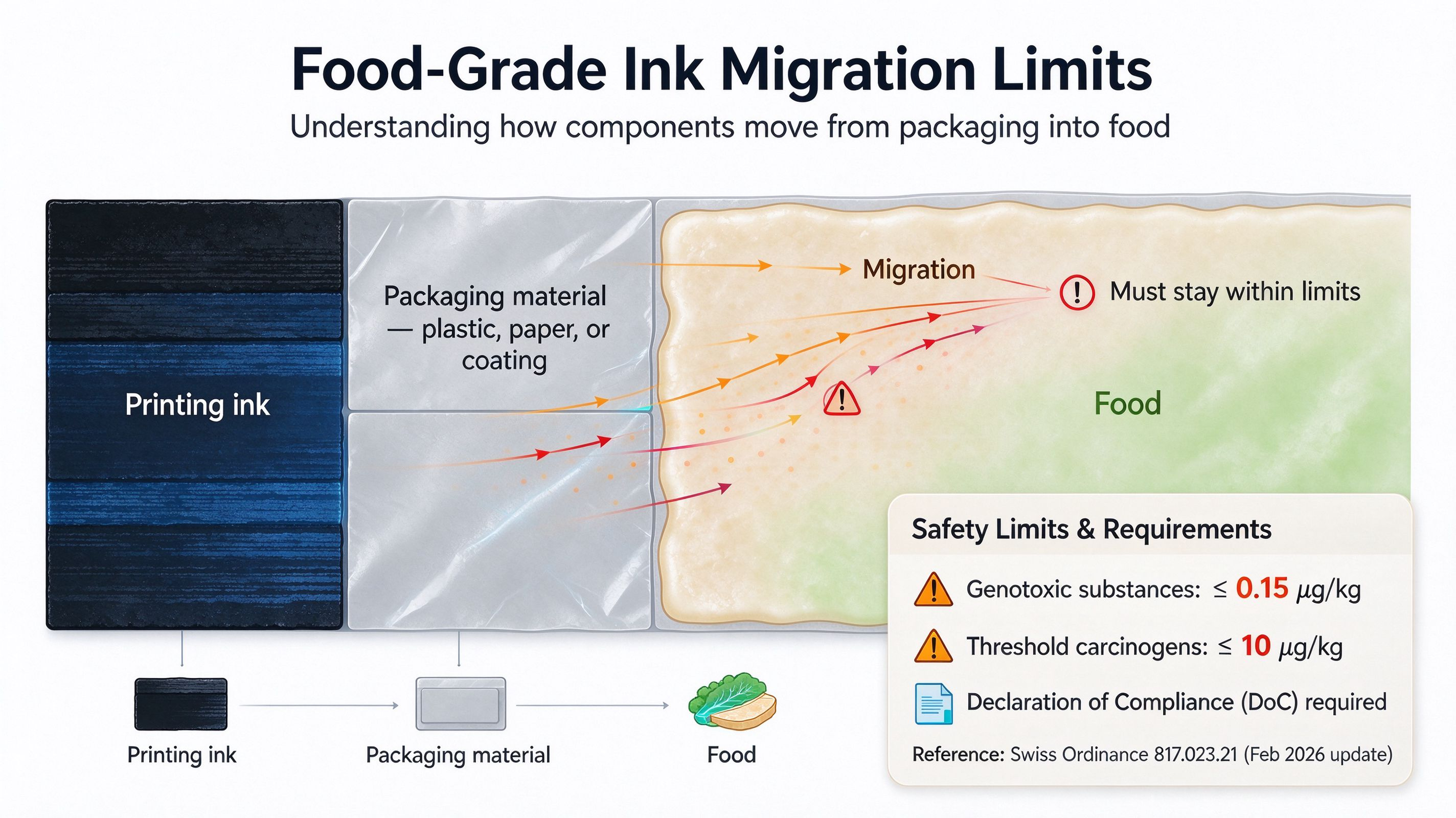
Indirect contact means the ink is on the packaging, with a barrier between the ink and the food. The concern here is migration—whether chemicals from the ink can travel through the packaging into the food. This is where most industrial food packaging inks operate.
Preventing Ink Migration: Chemical Safety, Heavy Metal Limits, and SML/OML Testing
Even when ink doesn't touch food directly, tiny amounts of chemicals can migrate. The Swiss Ordinance 817.023.21 sets limits for these substances. The February 2026 update introduced stricter rules:
- Cancer-causing substances must not exceed 0.15 µg/kg
- Other hazardous substances have a limit of 10 µg/kg
The Ordinance also requires a Declaration of Compliance (DoC) for printing inks used in food packaging.
Key Regulatory Frameworks: FDA 21 CFR, EU (EC) No 1935/2004, and Swiss Ordinance
Three rules matter most:
- FDA 21 CFR (U.S.): Food contact materials must be safe. The FDA doesn't certify "food-grade ink," but inks must comply with applicable regulations.
- EU (EC) No 1935/2004: The general safety rule for food contact materials in Europe. It says materials must not transfer anything harmful to food. Specific rules for printing inks aren't fully harmonized yet, but the Swiss list is widely used as a reference.
- Swiss Ordinance 817.023.21: The most detailed rulebook for printing inks in food packaging. The 2026 update made compliance declarations mandatory and clarified how to assess risky substances.
Selecting the Right Technology for Food and Beverage Coding
Handheld Inkjet Printers vs. Automated Production Line Coders
Handheld printers are flexible. They're portable, battery-powered, and can move between lines. Good for small to medium runs, seasonal production, or facilities with multiple coding points. Bentsai handheld inkjet printers cover print heights from 0.5 inch to 4 inches and work on both porous and non-porous surfaces with the right ink.
Automated line coders are fixed in place and print at high speed. They're built for continuous, high-volume operations. Faster and more consistent, but they need installation and dedicated space.
What does Bentsai Recommend?
For food and beverage coding, Bentsai offers food and beverage coding inkjet printers built for the job:
- Small character printing: 0.8mm to 25.4mm for detailed codes on packaging, bottles, and small items
- Works on many materials: Plastic, glass, aluminum, bags, caps, cartons
- Handles curved surfaces: Sharp marks on bottles and cans
- Quick-dry inks: Dates and batch codes don't smudge during packing
- Sensor integration: For automated printing on production lines
If you need portable, on-demand coding with food-safe ink options, Bentsai's handheld TIJ printers are a practical fit.
Conclusion: Ensuring Future-Proof Compliance and Sustainability
Date coding isn't just about printing a date. It's about understanding what the date means, choosing inks that are safe for your packaging, and reducing the confusion that leads to wasted food. Know your labels—quality or safety. Check your ink against the rules for your market. And pick equipment that matches your production volume. Get these right, and you'll stay compliant, cut waste, and keep customers coming back.
About the Author

Matty Chen is an Inkjet Application Engineer, and BENTSAI Inkjet Printing technology Consultant. He specializes in industrial inkjet printing technologies, with a focus on handheld printers, thermal inkjet systems, and coding solutions. His work explores ink performance, material compatibility, and practical printing applications for businesses across manufacturing, packaging, and product customization industries.
Ask Question
No questions and answers

