Printing Directly onto Packages vs. Buying Thermal Sticker Labels: Cost Calculation Guide
If you're still buying rolls of thermal labels and peeling them onto every box, you're paying for more than just the sticker. You're paying for the backing paper, the labor to apply it, and the warehouse space to store it.
This guide compares the real numbers: direct-to-package printing with a handheld TIJ printer vs. thermal sticker labels. Not just the consumable cost per label, but the full picture—labor, waste, and total cost of ownership.
Key Takeaways:
- Consumable Cost: Thermal labels cost roughly $0.04–$0.06 per label (direct thermal) or $0.05–$0.08 (thermal transfer with ribbon). Direct TIJ printing eliminates label stock entirely—you only pay for ink.
- Labor Cost: Every thermal label requires peel-and-apply time. Direct printing eliminates that step, freeing up hours per week.
- Waste Reduction: Pre-printed thermal labels become obsolete when batch numbers change. Direct printing eliminates label waste and backing paper disposal.
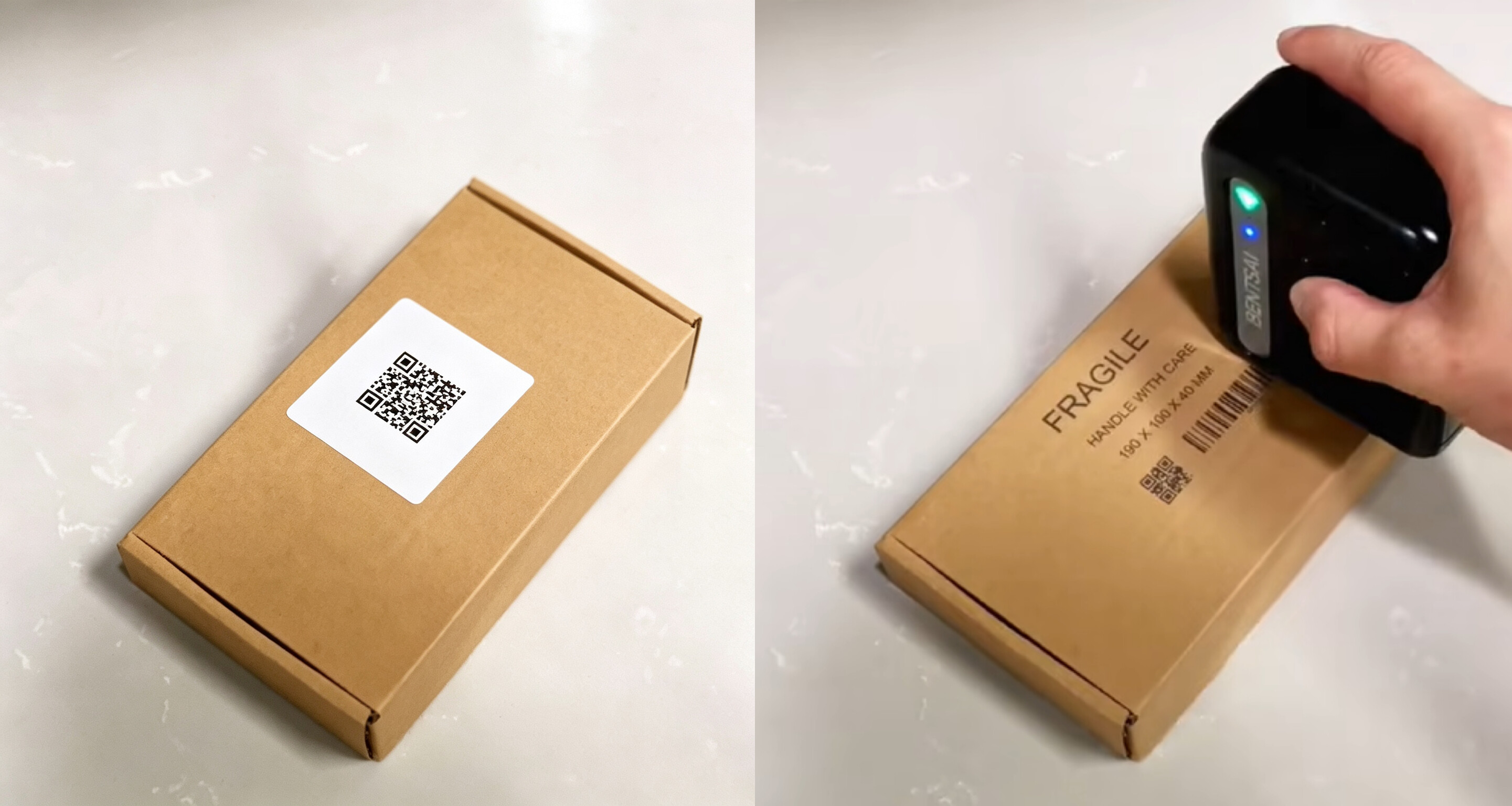
Understanding the Core Cost Differences: Direct Inkjet vs. Thermal Sticker Labels
What is Direct-to-Package Printing (TIJ)?
Direct-to-package printing means marking the product or packaging itself, with no label stock in between. A thermal inkjet (TIJ) printer sprays fast-drying ink directly onto cardboard, plastic, or other surfaces.
Key Components
- TIJ printhead: Fires tiny ink droplets onto the surface at 300–600 DPI
- Ink cartridge: Contains both the ink and the printhead; replace when empty
- Environmentally-friendly: No label stock, no ribbon, no backing paper. The only consumable is ink
Bentsai handheld TIJ printers start at $530 and require no installation or maintenance contracts.
What is Thermal Labeling (Direct Thermal and Thermal Transfer)?
Thermal labeling uses heat to create an image on specially coated label paper.
Key Components:
- Thermal printer: Applies heat to the label
- Label stock: The adhesive-backed paper itself (direct thermal)
- Ribbon: Required for thermal transfer printing; melts onto the label for durability
Direct thermal labels need no ribbon but fade under heat and sunlight. Thermal transfer labels use a ribbon and last longer outdoors.
Financial Breakdown: Cost-Per-Unit Comparison
Direct Consumable Cost per 10,000 Packages
| Category | Cost per 1,000 | Cost per 10,000 | Key Components |
| Thermal Labels (Thermal Transfer) | $40 – $60 | $400 – $600 | Label stock ($23–$54/roll) + Ribbon (~$9/roll) |
| Direct TIJ Printing (Bentsai) | $3.50 – $5.00 | $35 – $50 | Ink cartridge only (~$140 per 42ml cartridge, ~40,000 labels) |
| Direct TIJ Printing (Non-Bentsai) | $5.00 – $8.00 | $50 – $80 | Ink cartridge only (~$180–$220 per cartridge, lower yield) |
| Savings vs. Thermal (Bentsai) | $35 – $55 | $350 – $550 | — |
| Savings vs. Thermal (Non-Bentsai) | $32 – $52 | $320 – $520 | — |
Labor Cost & Ergonomic Efficiency
Thermal labels require manual peel-and-apply. Each label takes a few seconds—but across thousands of packages, those seconds add up.
At 10,000 packages per month, manual labeling at roughly 5 seconds per label equals 14 hours of labor. At $20/hour, that's $280 per month just to stick labels on boxes.
Direct printing eliminates the peel-and-apply step entirely. The worker prints the code directly on the box in one motion—no separate label handling.
Total Cost of Ownership (TCO) and ROI Calculator Model
Direct Printing vs. Thermal Label TCO Breakdown
| Cost Factor | Thermal Sticker Labels | Direct-to-Package Inkjet (Bentsai) |
| Upfront Hardware | $300–$1,000 (thermal printer) | $530–$2,199 (handheld TIJ) |
| Consumable Unit Cost (per 1,000) | $40–$60 (label + ribbon) | $3.50–$5.00 (ink only) |
| Labor per 1,000 Units | ~1.4 hours peel-and-apply | Near zero (print directly on package) |
| Maintenance / Wear | Printhead replacement; label jams | Cartridge replacement only |
| Environmental Waste | Backing paper, label waste, ribbon | None (ink only) |
Simple ROI Model for 10,000 packages/month:
- Thermal label consumables: ~$500/month
- Direct printing ink: ~$40/month
- Labor savings: ~$280/month (14 hours at $20/hr)
- Monthly savings: ~$740
- Payback on a $700 B35 printer: ~1 month
Indirect Benefits: Sustainability and Supply Chain Flexibility
- Elimination of Inventory Bottlenecks
Pre-printed thermal labels lock you into a specific batch number or date. If production changes, those labels become waste. Direct printing eliminates this—print the correct data on demand, with no obsolete stock.
- Environmental Impact & ESG Compliance
Thermal labels generate backing paper (silicone-coated, not recyclable) and ribbon waste. Direct printing produces no label waste. For companies tracking ESG metrics or reducing packaging waste, this is a measurable improvement.
- Surface Adaptability
Direct TIJ printing works on cardboard, plastic, glass, metal, and wood—with the right ink. For non-porous surfaces like plastic or coated boxes, quick-drying solvent inks bond to the surface and resist smudging.
Step-by-Step Decision Framework: Which System Fits Your Volume?
- Low Volume (<100 prints/day)
A handheld TIJ printer is the clear choice. Low upfront cost, no label stock, and portable operation. You can print on demand, anywhere in the warehouse.
- Medium-to-High Volume (500–10,000+ prints/day)
Both systems can work, but the math favors direct printing if you're printing variable data (batch codes, dates, serial numbers). Thermal labels make sense only if you're printing the same static label thousands of times and need ultra-high speed.
For most small to medium operations, portable handheld inkjet printers offer the best balance: low cost, high flexibility, and zero label waste.
Frequently Asked Questions
Q: Will direct inkjet ink smudge on glossy or plastic packaging?
With the right ink, no. Solvent-based fast-dry ink bonds to non-porous surfaces like plastic and glossy packaging. It dries in 2–5 seconds and resists smudging. Water-based ink is for porous surfaces like cardboard and paper.
Q: How long does a single TIJ ink cartridge last compared to a roll of thermal labels?
One cartridge outlasts dozens of label rolls. A 42ml TIJ cartridge prints approximately 2,000,000 characters—enough for roughly 40,000 typical shipping labels. A roll of thermal labels typically contains 500–1,000 labels.
About the Author

Matty Chen is an Inkjet Application Engineer, and BENTSAI Inkjet Printing technology Consultant. He specializes in industrial inkjet printing technologies, with a focus on handheld printers, thermal inkjet systems, and coding solutions. His work explores ink performance, material compatibility, and practical printing applications for businesses across manufacturing, packaging, and product customization industries.
Ask Question
No questions and answers

