Coding Wet Aluminum Cans in Craft Breweries: Condensation Resistance and Bottom-Coding Workflows
Why Aluminum Can Coding Is So Important for Craft Breweries
Aluminum cans now make up 78% of packaged craft beer volume. That's a lot of cans—and every one needs a code. The code on the can bottom is the brewery's only link between a finished product and its production record. If it's missing or smudged, traceability breaks.
Why Standard Coding Fails
The problem is condensation. Cans come off the filling line cold and wet. Water sits on the surface, and standard ink can't bond to a wet substrate. The result is smudged, unreadable codes that fail scanning and compromise traceability.
How craft breweries prevent ink smudging on cold cans
Two things fix it: dry the surface, and use the right ink. An air knife blows moisture off the can bottom right before printing. Then a solvent-based TIJ ink bonds directly to the aluminum and dries in seconds. That's the standard approach for food and beverage coding inkjet printers—keep the surface dry, and use ink made for metal.
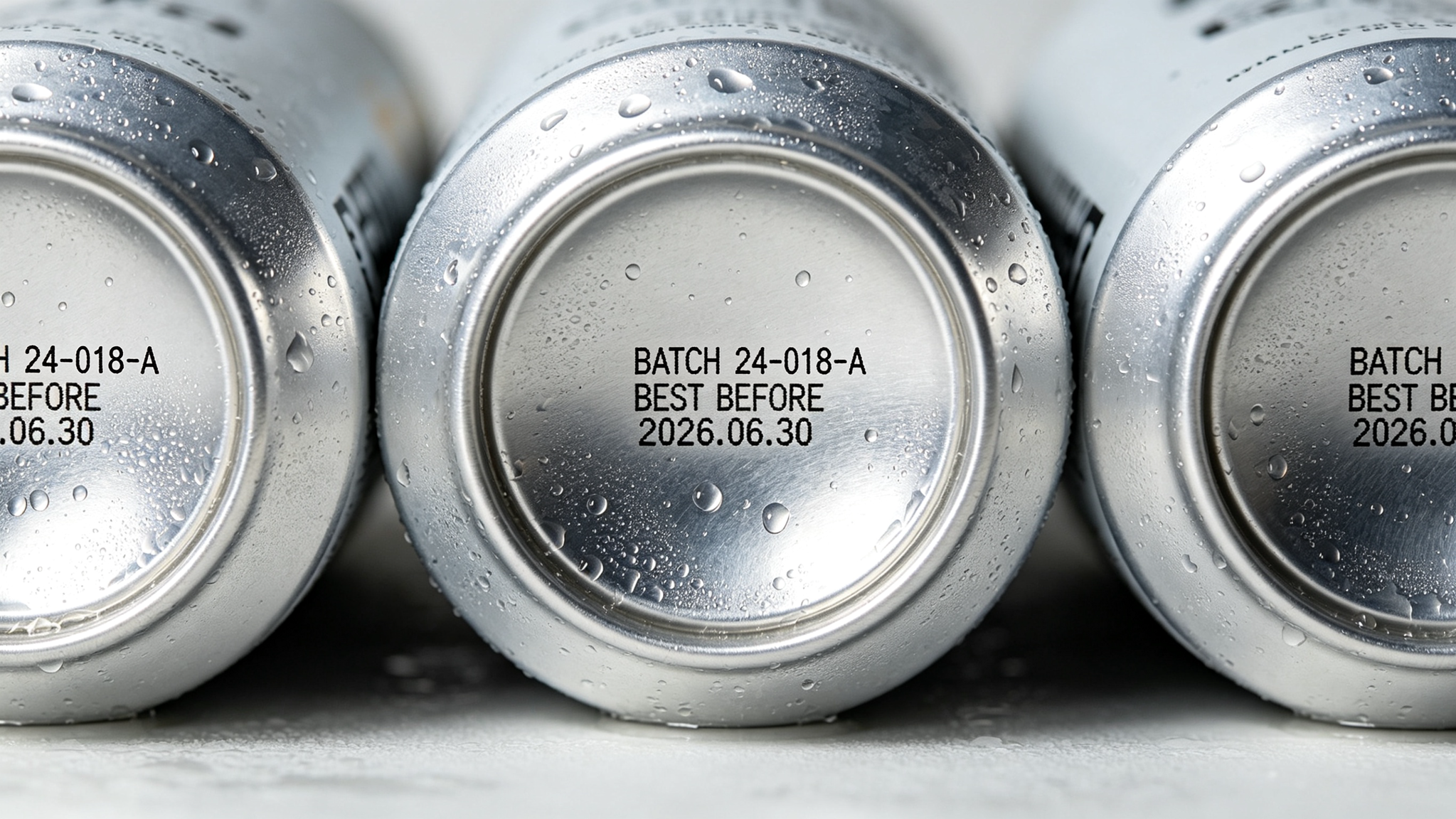
Why Coding Wet Aluminum Cans Causes Smudging and Compliance Failures
Reason (substrate & moisture mechanics)
Aluminum is non-porous. Ink doesn't soak in—it has to bond to the surface. When a layer of condensation sits between the ink and the metal, that bond never forms. The ink floats on the water film, then smears or wipes away as cans move through the line.
Traceability requirements (FSMA 204)
The FDA's Food Traceability Rule requires businesses that pack foods on the Food Traceability List to assign and share Traceability Lot Codes (TLCs). A smudged code means the TLC can't be read. That breaks the traceability chain and creates recall risk. For breweries, the code on the can bottom is often the only place the lot number exists.
The Cost of Unidentifiable Can Codes
A code that can't be read is a code that doesn't exist:
- When a retailer or distributor can't scan the lot number, the shipment may be rejected.
- When a recall is necessary, the brewery can't isolate the affected run—so it pulls everything.
The cost isn't just the ink and the can. It's the product, the freight, and the brand trust.
Condensation-Resistant Ink Technologies for Aluminum Beverage Cans
Standard water-based ink won't work on aluminum—wet or dry. Bentsai solvent-based TIJ inks are formulated for non-porous surfaces, bond to dry metal, and dry in 2–5 seconds. Compared to other technologies, CIJ prints fast but requires solvent handling and regular maintenance, and still struggles with standing water. Laser marks the metal directly with no ink at all, but comes with a high upfront cost and permanent marks that can't be changed. TIJ with solvent ink offers the lowest entry cost.
Key Ink Selection Criteria for Breweries
- Substrate compatibility: Must be solvent-based for aluminum.
- Moisture tolerance: The ink must be waterproof.
- Dry time: Fast enough that cans don't smear during handling.
- Food-contact safety: For external can coding, industrial solvent inks are appropriate as long as they don't contact the beer.
Bottom Coding Operation Procedure on Craft Beer Bottling Line (Step-by-Step)
- Cans exit the filler: They're cold and wet with condensation.
- Air knife station: A focused blast of air removes moisture from the concave bottom where the code will go. This step is not optional—the ink will not bond to a wet surface.
- Photoelectric sensor: Detects each can and triggers the print signal.
- TIJ printhead fires: Solvent ink is ejected onto the dry aluminum surface.
- Code cures: Ink dries in 2–5 seconds. Don't touch the code until it's fully dry.
- Verification: A vision system or manual check confirms the code is legible.
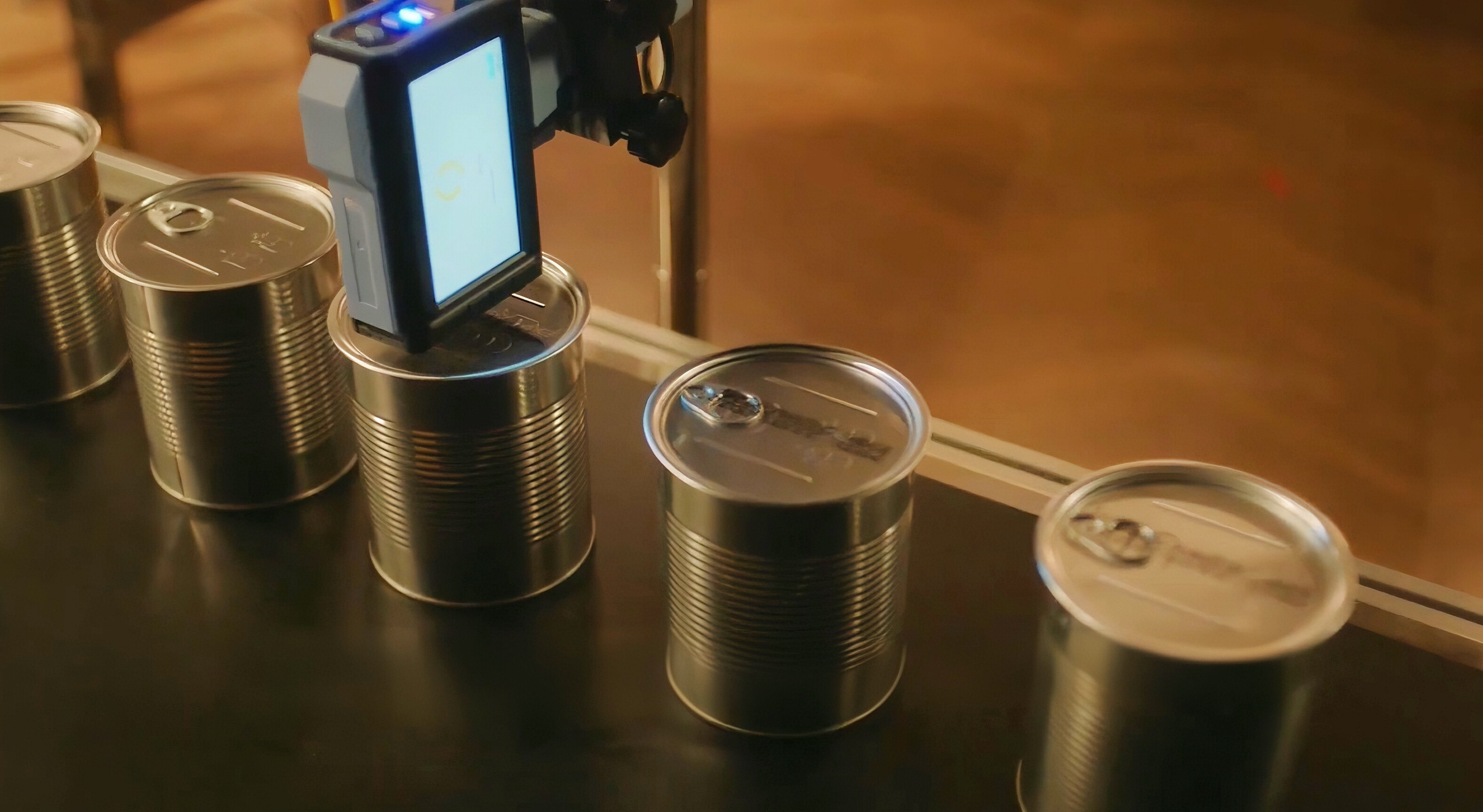
Choosing Between Inline Bottom-Coding and Handheld Printers for Craft Operations
1. Matching hardware to canning volume
Low volume / intermittent runs: A handheld TIJ printer is practical. The operator picks up the printer, positions it under the can, and prints. No line integration required.
Medium-to-high volume: An inline TIJ system mounted on the conveyor with a photoelectric sensor prints automatically as each can passes. Faster, more consistent, and hands-free.
2. Operational scenarios & recommended setups
Taproom canning days: Handheld. You're running a few hundred cans, and flexibility matters more than speed.
Contract canning or year-round production: Inline. The volume justifies the setup, and consistency is critical.
For breweries considering portable options, handheld inkjet printers like the Bentsai BT-HH6105F offer 600 DPI resolution, solvent ink compatibility, and a 2–5mm throw distance—enough to print a clear lot code on the bottom of a can. It's a low-cost entry point for breweries not ready for a fixed line system.
FAQs
Q1: Can thermal inkjet (TIJ) ink print on wet aluminum cans without smearing?
Not directly onto standing water. The surface needs to be dry at the point of printing. Air knives remove the moisture, then solvent-based TIJ ink bonds to the aluminum. The combination produces a durable code that survives the cold chain.
Q2: What is the ideal throw distance for printing on the bottom of an aluminum beverage can?
For standard TIJ printheads, 2–5mm is optimal. Some high-throw cartridges can achieve up to 10mm, which helps when printing on recessed or angled surfaces like a can bottom. Bentsai printers specify a 2–5mm throw distance.
Q3: What information should craft breweries print on the bottom of beer cans?
At minimum: lot/batch code, best-by or expiration date, and a production timestamp. For FSMA 204 compliance, the lot code must link back to your traceability records. Many breweries also add a canning line identifier or shift code for internal tracking.
About the Author

Matty Chen is an Inkjet Application Engineer and BENTSAI Inkjet Printing Technology Consultant. He specializes in industrial inkjet printing technologies, with a focus on handheld printers, thermal inkjet systems, and coding solutions. His work explores ink performance, material compatibility, and practical printing applications for businesses across manufacturing, packaging, and product customization industries.
Ask Question
No questions and answers

