CIJ vs. TIJ Printers: Which Industrial Inkjet Technology is Right for You?
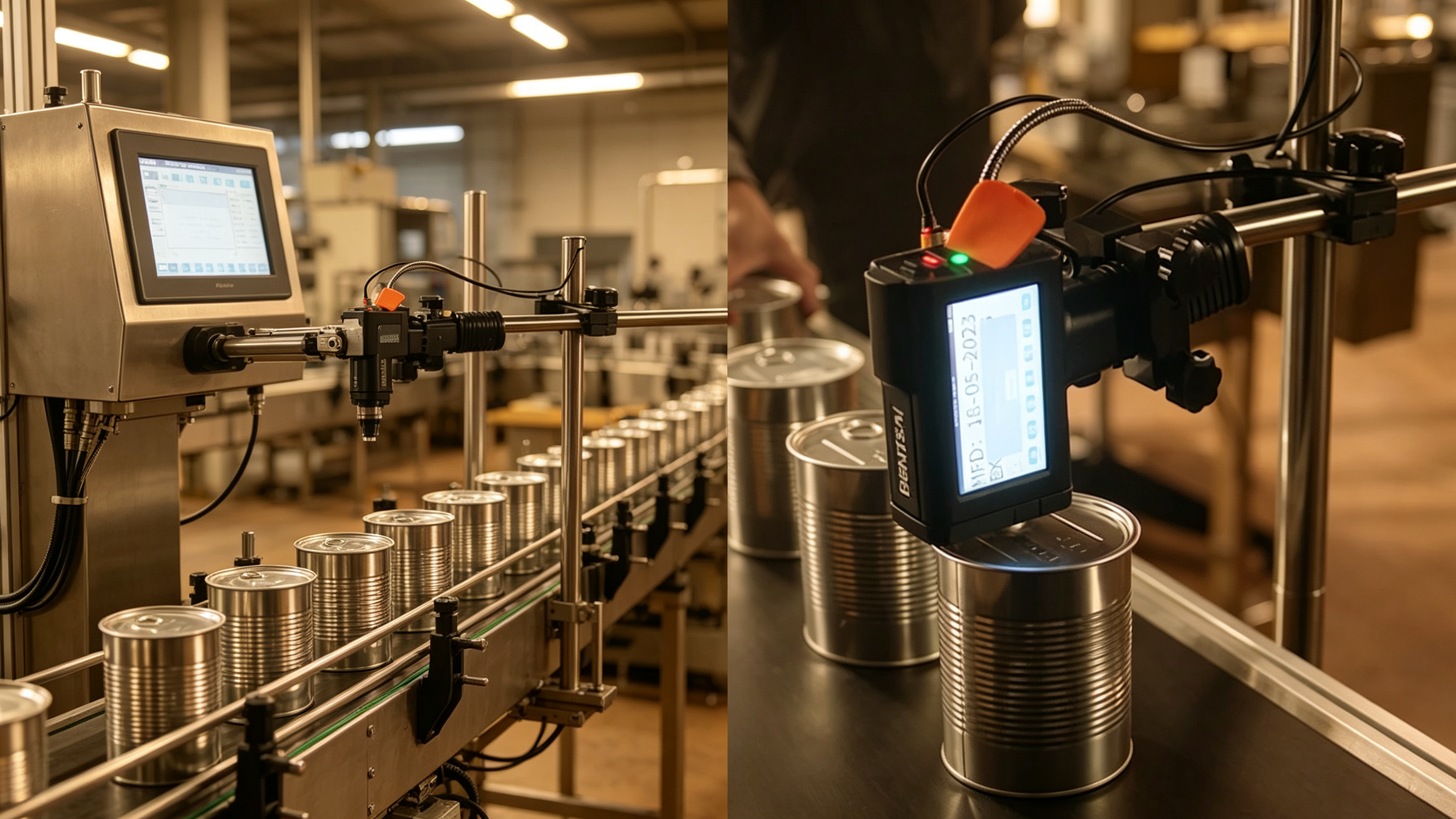
Choosing the right industrial printer for your production line isn't easy. Two technologies dominate the market: Continuous Inkjet (CIJ) and Thermal Inkjet (TIJ). Both print codes, dates, and barcodes on products and packaging—but they work very differently.
CIJ printers have been the industry standard for decades. They're fast, reliable, and print on almost any surface. But they're also expensive, messy, and require regular maintenance.
TIJ printers are newer to the industrial space. They offer high-resolution printing, lower costs, and simpler operation. But they work best on certain surfaces and have a shorter print distance.
This guide breaks down the differences so you can decide which technology fits your production line.
Key Takeaways: CIJ vs. TIJ at a Glance
- CIJ printers are high-speed workhorses for non-porous surfaces. They handle long runs and challenging materials but cost more to buy, run, and maintain.
- TIJ printers deliver sharp, high-resolution prints (up to 600 DPI) on porous surfaces. They're cheaper to buy and operate, with minimal maintenance.
- Choose CIJ if you print thousands of items daily on plastic, glass, or metal. You have a maintenance budget and technical staff.
- Choose TIJ if you print on cardboard, wood, paper, or clean plastics. You want lower costs, easier operation, and high-quality barcodes.
- Total Cost of Ownership (TCO) for TIJ is significantly lower over 3-5 years. The equipment costs less, ink is cheaper, and maintenance is minimal.
What is a Continuous Inkjet (CIJ) Printer?
A Continuous Inkjet (CIJ) printer is an industrial coding system that propels a continuous stream of ink droplets onto moving products. It's the traditional workhorse of production lines—fast, reliable, and capable of printing on almost any surface, including curved and uneven materials.
How CIJ Technology Works
- Ink is pressurized and forced through a tiny nozzle (typically 50-80 microns in diameter).
- The ink stream breaks into droplets via a piezoelectric crystal that vibrates at high frequency (50,000-100,000 times per second).
- Droplets are electrically charged as they pass through a charging tunnel.
- Charged droplets are deflected by high-voltage deflection plates.
- Only deflected droplets reach the substrate, forming the print. Undeflected droplets are recirculated back to the ink system.
This continuous circulation system is what gives CIJ its name—the ink never stops flowing.
Primary Advantages of CIJ
- Fast printing speeds: Up to 300 meters per minute, ideal for high-volume production lines
- Non-contact printing: Printheads can be positioned 10-30mm from the substrate, working on uneven or moving surfaces
- Surface versatility: Works on plastic, glass, metal, coated cardboard, and curved surfaces with solvent-based inks
- Long print distance: Can print on items that vibrate or move during production
- Durable marks: Solvent-based inks resist moisture, abrasion, and temperature changes
Disadvantages of CIJ
- High initial cost: CIJ systems typically start at $10,000-$25,000+
- Ongoing maintenance: Requires regular service (pumps, filters, printheads) and trained technicians
- Messy operation: Ink can drip, splatter, or coat surfaces around the printer
- Solvent fumes: CIJ inks emit VOCs (volatile organic compounds), requiring ventilation
- Significant downtime: Cleaning and maintenance can take hours, requiring production line stops
What is a Thermal Inkjet (TIJ) Printer?
A Thermal Inkjet (TIJ) printer is a compact, drop-on-demand coding system that uses heat to eject ink droplets directly onto products. It's the same technology found in home and office inkjet printers—adapted for industrial environments.
What are the differences between Bentsai inkjet printers and other inkjet printers?
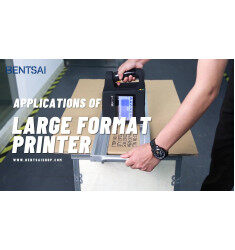
Bentsai handheld TIJ printers are designed for portability, high-quality prints, and ease of use, making them suitable for a wide range of manufacturing and packaging applications.
How TIJ Technology Works
- A tiny resistor on the printhead heats up to over 300°C in just a few microseconds.
- The rapid heating creates a vapor bubble in the ink chamber.
- The bubble expands and forces ink out through the nozzle (typically 30-40 microns).
- When the resistor cools, the bubble collapses, creating a vacuum that pulls fresh ink into the chamber.
- This cycle repeats thousands of times per second to form text, barcodes, and graphics.
The "drop-on-demand" nature of TIJ means ink is ejected only when needed—no continuous flow, no recirculation, no waste.
Primary Advantages of TIJ
- High resolution: Up to 600 DPI, producing sharp text and scannable barcodes comparable to desktop printers
- Lower cost: Equipment costs a fraction of CIJ ($530-$2,199 for Bentsai handheld models)
- Minimal maintenance: The printhead is in the cartridge; replace it when ink runs out
- Clean operation: No dripping, splattering, or solvent fumes; safe for food packaging environments
- Simple operation: Anyone can learn to use a TIJ printer in minutes; no trained technicians needed
- Portability: Battery-powered handheld models can be used anywhere on the factory floor
Disadvantages of TIJ
- Short print distance: Printhead must be within 2-5mm of the substrate for optimal quality
- Surface limitations: Best results on porous surfaces (cardboard, wood, paper) or clean, flat plastics with solvent inks
- Lower speed: Slower than CIJ (though both are fast enough for most production lines)
- Cartridge lifespan: Printhead is integrated into the cartridge; once it runs out, you replace the entire unit
- Limited on curved surfaces: Works best on flat or gently curved surfaces
For more details on thermal inkjet printers, see our full product lineup.
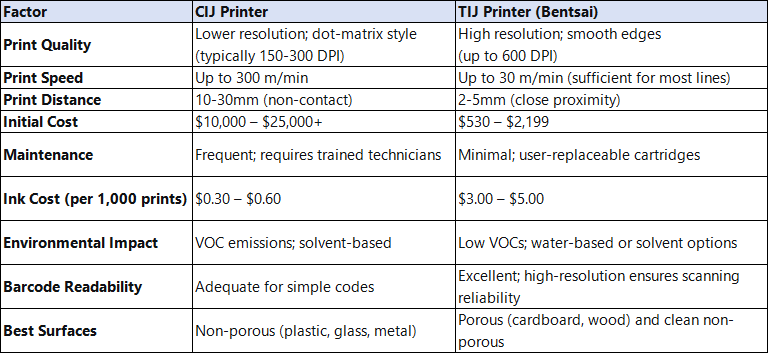
CIJ vs. TIJ: Direct Comparison
Total Cost of Ownership (TCO) Analysis
The cost difference between CIJ and TIJ goes beyond the purchase price. Here's a 3-year TCO comparison for a typical production line:
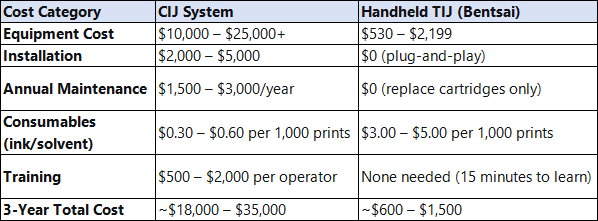
Costs based on industry averages for a single production line. CIJ totals include installation, maintenance contracts, and consumables. Bentsai TIJ totals include equipment, ink cartridges only, and no maintenance or training costs.
Key insight: Over three years, a CIJ system can cost up to 25 times more than a Bentsai handheld TIJ printer—even before factoring in downtime and lost production time. While CIJ has a lower cost per print for high-volume, 24/7 operations, TIJ printers offer faster ROI for small to medium runs, multi-line facilities, and seasonal production.
Industry Application Examples
- Food & Beverage: TIJ printers print expiration dates, batch codes, and barcodes on cardboard boxes, pouches, and food trays. Water-based inks are food-safe and low-odor. CIJ printers handle high-speed canning and bottling lines where solvents are needed.
- Pharmaceuticals: TIJ's high resolution (600 DPI) ensures small DataMatrix codes scan reliably, meeting FDA requirements. CIJ printers mark glass vials and plastic containers but require careful maintenance.
- Logistics & Warehousing: TIJ handheld printers generate QR codes and barcodes on shipping boxes at the point of packing. CIJ systems are fixed and require items to be brought to them.
- Manufacturing: TIJ printers mark wood, composite, and metal surfaces. CIJ printers handle oily or dirty surfaces where adhesion is difficult.
Should You Switch from CIJ to TIJ?
Here are clear signs that TIJ might be a better fit for your operation:
Consider switching to TIJ if:
- You print primarily on porous surfaces (cardboard, wood, paper)
- Your current CIJ system is expensive to maintain and service
- You want to eliminate adhesive labels and pre-printed packaging
- You have multiple production lines or need portable printing
- Your operators don't have specialized technical training
- You want to reduce VOC emissions and improve workplace safety
Stick with CIJ if:
- You print 24/7 on non-porous surfaces at very high speeds
- Your products have curved, uneven, or textured surfaces
- You need to print from a long distance (vibrating or moving items)
- You already have trained technicians and a maintenance budget
For many manufacturers, the answer is both. Use CIJ for dedicated high-speed lines and TIJ for secondary coding, seasonal runs, or portable applications. Bentsai's handheld TIJ printers complement existing CIJ systems perfectly—giving you flexibility without replacing your main line.
About the Author

Matty Chen is an Inkjet Application Engineer, and BENTSAI Inkjet Printing technology Consultant. He specializes in industrial inkjet printing technologies, with a focus on handheld printers, thermal inkjet systems, and coding solutions. His work explores ink performance, material compatibility, and practical printing applications for businesses across manufacturing, packaging, and product customization industries.
Small Character Inkjet vs. Large Character Inkjet: Which Printers is Right for Your Business?
Ask Question
No questions and answers

