How Handheld Printers Are Transforming E-Commerce Packaging Personalization
In the competitive world of e-commerce, branding and customer experience reign supreme. When an item arrives at a customer's doorstep, the packaging is the first thing they interact with. Personalized packaging conveys a story, promotes brand recall, and elevates the unboxing experience. In an age where social media unboxing videos can go viral, this is an opportunity no e-commerce business should miss.
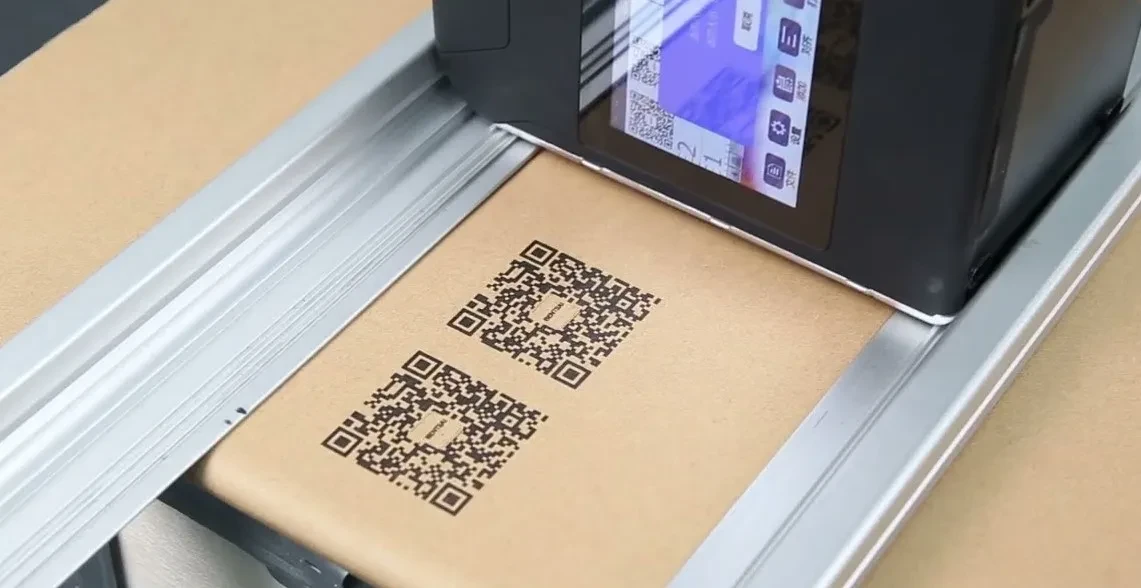
But how do e-commerce businesses personalize packaging without high costs? The answer lies in handheld inkjet printers. These compact devices let you print logos, messages, QR codes, barcodes, or even individual customer names directly on packaging materials—on demand, without pre-printed boxes or expensive minimum orders.
The Financial Impact of Personalized E-Commerce Packaging in 2026
Personalized packaging isn't just nice to have—it's big business. The global e-commerce packaging market is projected to grow at a CAGR of 13.62%, reaching $168.66 billion by 2031. Meanwhile, the custom e-commerce packaging segment alone was valued at $33.33 billion in 2024 and is expected to hit $59.29 billion by 2031, growing at 8.7% CAGR.
Why this growth? Brand differentiation is key. Companies are using customized packaging to stand out in a competitive market, provide unique unboxing experiences, and reinforce brand identity. The personalized packaging market is valued at $43.4 billion in 2026 and projected to grow to $69.2 billion by 2034.
Handheld printers fit perfectly into this trend. Instead of ordering pre-printed boxes with high minimums, you print what you need, when you need it. This saves warehousing space, reduces waste from obsolete packaging, and lets you test different designs without financial risk. For more on the cost benefits, check out our comparison of direct-to-package printing.
3 Real-World Application Examples for E-Commerce
1. Food & Beverage: Printing Batch Codes & "Best By" Dates
For food brands, packaging isn't just about branding—it's about compliance. Handheld printers apply batch codes and "Best By" dates directly on food boxes, pouches, and containers. Quick-drying inks prevent smudging, and the print stays readable even in cold chain conditions. This approach eliminates the waste of pre-printed packaging when date codes change. For small food manufacturers looking for affordable traceability solutions, handheld printers offer a low-cost entry point.
2. Cosmetics & Beauty: Unboxing Experiences with QR Codes
Cosmetics brands thrive on visual appeal and shareability. Handheld printers let you print unique QR codes on each package—linking customers to tutorials, ingredient lists, or loyalty rewards. The result? Better engagement and more Instagram-worthy unboxing moments. The printers work on glossy packaging, glass bottles, and plastic containers, making them ideal for beauty products. Explore our small character inkjet printers for precise, high-quality code application on premium packaging.
3. Apparel & Boutique: Custom Logos & Variable Data
For apparel brands, packaging is part of the brand story. Handheld printers let you print custom logos, thank-you messages, or even individual order numbers on mailers. Variable data printing means you can change text or images from one box to the next without stopping the line—perfect for small boutiques handling personalized orders.
Key Entity Attributes of Bentsai Handheld Printers
| Attribute | Description |
| Print Technology | Thermal Inkjet (TIJ) |
| Resolution | Up to 600 DPI for sharp barcodes and text |
| Print Height | 2.5mm to 92mm, depending on model |
| Surface Compatibility | Works on cardboard, plastic, glass, metal, wood, and fabric |
| Ink Types | Water-based (porous surfaces) and solvent-based (non-porous surfaces) |
| Connectivity | USB for file transfer; some models support Wi-Fi |
| Battery Life | 8+ hours of continuous use |
| Mounting Option | Can be mounted on bracket with photoelectric sensor for auto-printing |
Manual vs. Automated: Integrating Printers into Your Packaging Line
Bentsai handheld printers are designed to grow with your business. Start with manual operation, then scale to automated printing without buying new equipment.
How to mount a handheld printer on a stainless steel bracket with a photoelectric sensor for automated conveyor belt printing:
- Secure the bracket: Mount the stainless steel bracket above your conveyor belt at a height that allows the print head to be 2-5mm above the packaging surface.
- Attach the printer: Slide the printer into the bracket and tighten the locking screws.
- Install the photoelectric sensor: Position the sensor on the side of the conveyor, aligned so it detects each package as it passes.
- Connect the sensor cable: Plug the sensor cable into the printer's external interface port.
- Configure settings: On the printer touchscreen, select "Auto Print Mode" and adjust print delay and speed settings to match your conveyor's speed.
- Test and adjust: Run a few packages through to verify print position. Adjust sensor position or print delay as needed.
Once set up, the printer automatically triggers when a package passes the sensor. No manual intervention needed—just consistent, accurate printing at production speed.
Frequently Asked Questions
Q1: Can handheld printers print on glossy packaging and plastic?
Yes. With fast-dry solvent ink, handheld printers adhere to glossy cardboard, plastic pouches, glass, and metal. The ink dries in seconds and resists smudging.
Q2: What is the cost difference between handheld printing and pre-printed boxes?
Pre-printed boxes require minimum order quantities (often 500-1,000 units) and become waste when designs change. Handheld printing has no minimums and prints only what you need. For a small business shipping 100 orders monthly, handheld printing can save thousands in packaging waste annually.
Q3: Do I need special ink for food-grade packaging?
For external packaging (boxes, pouches), Bentsai's standard water-based and solvent inks are suitable. For direct food contact applications, you would need food-grade or edible inks formulated to FDA standards. Always check your specific regulatory requirements.
The e-commerce packaging market is growing fast—and so is the need for personalization. Handheld inkjet printers offer a cost-effective way to add logos, QR codes, batch codes, and custom messages to every package, on demand. Whether you're a small boutique handling dozens of orders or a growing brand shipping thousands, Bentsai handheld printers scale with you—from manual operation to fully automated conveyor integration.
Personalized packaging was once a luxury for big brands. Now, with handheld printing, it's accessible to any business that wants to stand out.
Reference Source:
About the Author

Matty Chen is an Inkjet Application Engineer, and BENTSAI Inkjet Printing technology Consultant. He specializes in industrial inkjet printing technologies, with a focus on handheld printers, thermal inkjet systems, and coding solutions. His work explores ink performance, material compatibility, and practical printing applications for businesses across manufacturing, packaging, and product customization industries.
How Handheld Inkjet Printers Adapt to Remote Work & Mobile Logistics Scenarios
Ask Question
No questions and answers

